What Is the Best Square Pipe for 2026?
What Is the Best Square Pipe for 2026?
The best Square Pipe is not automatically the thickest, cheapest, or easiest option to find. It is the one that suits the load, environment, fabrication method, and inspection needs of the project. A frame in a dry workshop has different demands from an outdoor structure exposed to rain and temperature changes. Details matter. A few millimeters of wall thickness can affect weight, weld preparation, and fit.
This guide compares the factors buyers should check before choosing: steel grade, outside dimensions, wall thickness, straightness, surface condition, and available test documentation. It also considers how the pipe will be cut, drilled, welded, coated, and installed. Standards such as ASTM A500 or EN 10219 may help define product requirements, but the correct specification depends on the market and application. Confirm the relevant requirements with a qualified engineer or supplier. Do not choose by a product label alone.
No source article or verified interview was provided, so I cannot responsibly attribute a quotation to a named Square Pipe expert. Invented attribution would weaken trust. Instead, the comparison will focus on verifiable product details and practical trade-offs, including a point buyers sometimes overlook: a nominal size does not tell the whole story. Check the actual dimensions and tolerances. Then compare supplier records, not just prices. The final choice may involve compromise; even a well-made pipe can be wrong for a particular design. That is worth admitting. A sound 2026 decision starts with the application, then tests each candidate against it.
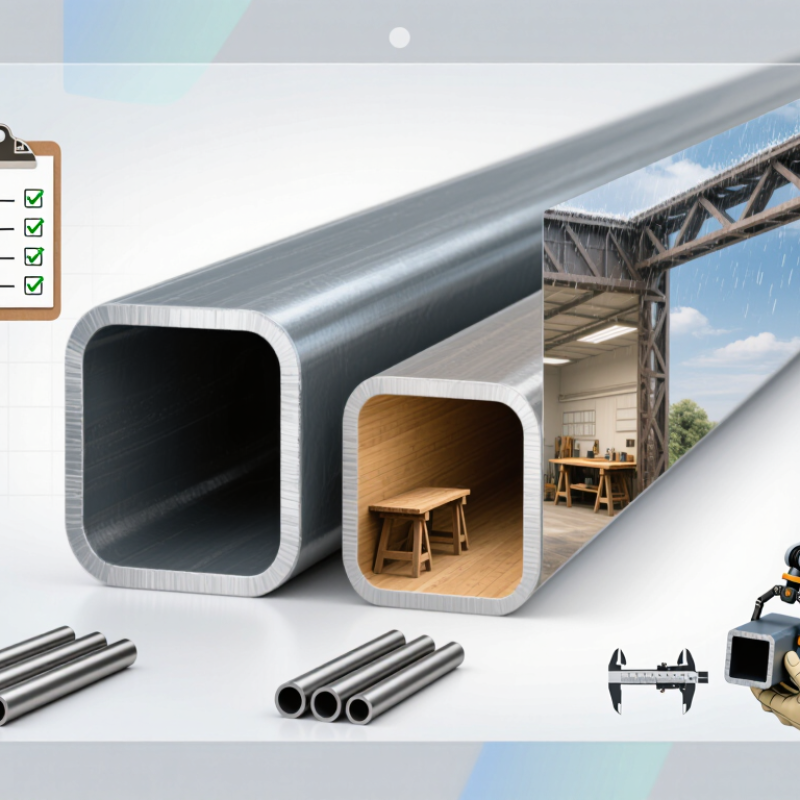
What Square Pipe Is and How It Is Made
What Is the Best Square Pipe for 2026?
What Square Pipe Is and How It Is Made
Square pipe, often called square structural tubing, is a hollow steel section with four flat sides and a uniform cross-section. It is used in frames, gates, supports, and machinery. Its flat faces make joining and measuring straightforward. Wall thickness, outside dimensions, steel grade, and finish all affect performance. The best choice depends on the load, environment, and fabrication method—not appearance alone.
A common manufacturing route starts with a coil of steel. Slitting equipment cuts it into narrow strips, which forming rolls bend into a tube. The edges are joined by electric resistance welding. Further rolls shape the tube into a square, then cutting equipment trims it to length. Small variations in corner radius and wall thickness can matter during assembly. They are easy to overlook.
The World Steel Association’s World Steel in Figures 2024 reports global crude steel production of 1,892.2 million tonnes in 2023. That figure describes the scale of steelmaking, not square-tube output. It does, however, underline why traceable material specifications matter. For structural applications, buyers commonly check dimensions and mechanical properties against applicable standards, such as ASTM A500. Ask for mill test documentation and inspect samples when tolerances are critical. A neat weld is reassuring, but it is not proof of every property.
How Materials and Grades Shape Pipe Performance
What Is the Best Square Pipe for 2026?
How Materials and Grades Shape Pipe Performance
There is no single best square pipe for every project. The right choice depends on loads, exposure, fabrication, and the required service life. For an indoor equipment frame, carbon steel may offer practical strength and easy welding. Outdoors, moisture can reach cut edges and joints, so a protective coating or a corrosion-resistant material may be more important than a higher strength grade. Details matter.
Grade affects how much load the pipe can carry, but it does not tell the whole story. Compare the specified yield strength with the design requirements, then check the actual wall thickness and section dimensions. Common structural standards define properties and tolerances; confirm that the supplier’s material certificate matches the project specification. Stainless steel can resist corrosion well, yet its cost and fabrication needs may not suit every job. A stronger grade is not automatically the safer choice if connections or supports are poorly designed.
Tips: Match the material to the environment, not just the price. Check weldability before fabrication, especially for thicker walls. Inspect coating coverage at corners and freshly cut ends. Keep records. If the load path is uncertain, ask a qualified engineer to review the design; this step is easy to overlook.
Key Factors for Choosing Square Pipe in 2026
For a 2026 project, the best square pipe is the one matched to its actual load, environment, and fabrication needs. Start with the design load, then check the outside dimensions, wall thickness, steel grade, and allowable tolerances. A thin wall may reduce weight and cost, but it can also mean more deflection or a weaker connection. That matters. Compare certified mill test reports, not just catalogue descriptions, and confirm the applicable product standard with your engineer or fabricator.
Corrosion protection deserves equal attention. Indoors, a suitable coating may be enough; outdoors or near moisture, galvanizing or a specified protective system may be more appropriate. Check cut ends and weld areas, too, since protection can be damaged during fabrication. World Steel Association’s World Steel in Figures 2024 reports 1,892.2 million tonnes of global crude steel production in 2023. That scale shows a broad supply base, but it does not guarantee consistent dimensions or quality in a particular order. Measure twice. One easy-to-miss detail is fit-up: a small dimensional mismatch can complicate assembly, even when the pipe meets its nominal specification. Compare delivery lead time, traceability, and total installed cost alongside price.
Comparing Square Pipe Types by Use and Environment
What Is the Best Square Pipe for 2026?
Comparing Square Pipe Types by Use and Environment
The best square pipe depends on its exposure, load, and maintenance plan. For dry indoor frames, carbon steel is often practical and easy to fabricate. Outdoors, galvanized steel adds a zinc barrier, but cut edges and welds still need attention. In coastal or chemical environments, stainless steel may suit the job better. Grade matters: even stainless steel can corrode in harsh chloride conditions.
Weathering steel can work outdoors when it dries regularly. It is a poor fit for persistently wet or salt-heavy locations. There is no tidy winner. A shiny finish alone does not prove long service life, and a higher purchase price does not always mean lower lifetime cost.
The NACE International IMPACT study estimated corrosion costs at 2.5 trillion US dollars globally, or 3.4% of global GDP. That figure covers many industries, not square pipe alone, but it highlights why exposure deserves serious attention. The World Steel Association’s World Steel in Figures 2024 reports 1,892.2 million tonnes of crude steel production in 2023. Broad supply does not guarantee consistent quality. Check dimensions, coating condition, grade documentation, and the actual site environment before specifying pipe. A small detail can matter.
How Standards and Testing Help Verify Quality
For 2026, the best square pipe is not simply the one with the thickest walls or smoothest finish. Its suitability depends on the frame, load, environment, and connection details. Check the required dimensions, wall thickness, steel grade, and applicable product standard before comparing quotes. Standards define measurable requirements, but the exact specification should match the project. A pipe intended for a sheltered interior frame may not suit a damp, exposed installation.
Tips: Ask for a mill test report showing grade and chemistry. Confirm that dimensions and tolerances were checked. For welded pipe, ask what inspection was performed on the seam. Keep records traceable to the delivered batch. Ask for evidence.
Testing turns claims into checks. Tensile results can help verify strength and ductility; dimensional inspection can reveal walls or sides outside tolerance. Depending on the standard and application, additional checks may be appropriate. Review documents for matching grade, size, batch, and test method—not just a stamp. If a supplier cannot explain a result clearly, pause and verify it with a qualified inspector. A tidy certificate is useful, but it cannot show every detail of a pipe’s condition. Visual inspection still matters: look for deep dents, damaged edges, uneven weld areas, and signs of corrosion. Honestly, paperwork and appearance can both miss things. Choose pipe on documented compliance, relevant test evidence, and suitability for its actual service.
What Is the Best Square Pipe for 2026? How Standards and Testing Help Verify Quality
ASTM A500 Grade B and Grade C square structural tubing are specified by minimum tensile and yield strengths. The right choice depends on the design requirements; verify the grade and test results against the applicable project specification.
Minimum specified strength (ksi). Tensile testing checks material strength, while dimensional inspection checks whether the pipe meets specified size and wall-thickness tolerances. Values shown are ASTM A500/A500M minimums for Grades B and C.