Top 10 Uses for Square Pipe in Construction Projects?
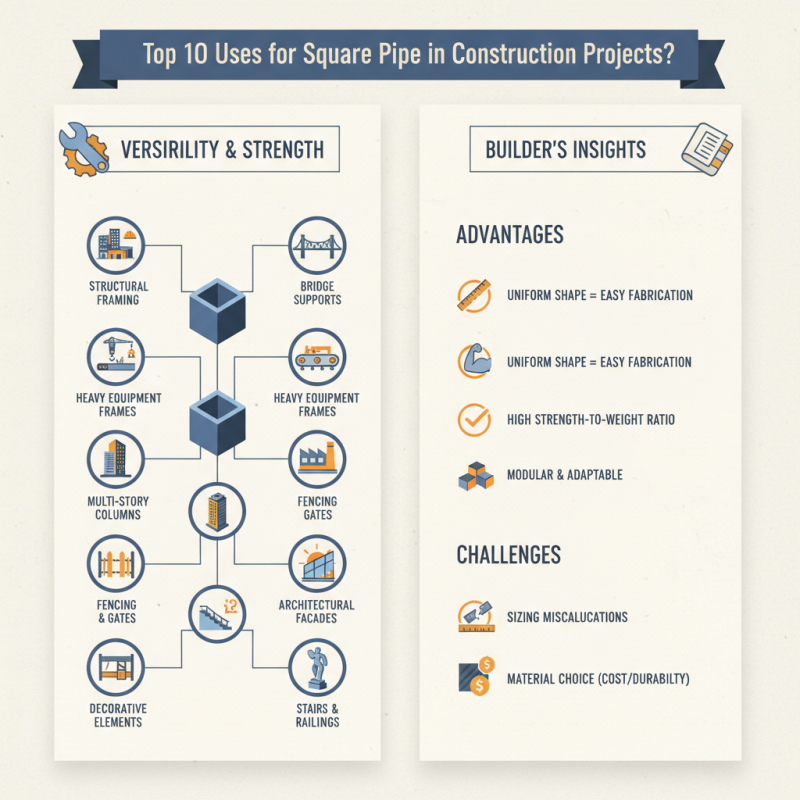
Square pipe plays a crucial role in modern construction projects. Its versatility makes it a preferred choice among builders and architects. This article explores the top ten applications of square pipe, showcasing its importance in various construction contexts.
From structural framing to decorative elements, square pipe serves multiple functions. It offers strength and stability, making it ideal for load-bearing structures. Builders appreciate its uniform cross-sectional shape, which simplifies fabrication and installation.
However, there are challenges to consider. Miscalculations in sizing can lead to structural issues. Additionally, the choice of material affects durability and cost. Understanding these nuances is essential for effective use of square pipe in construction.
Square Pipe Overview and Properties in Construction
Square pipes are essential in modern construction. They offer strength and versatility. Made from materials like steel and aluminum, square pipes provide durability. Their uniform shape allows for easy stacking and transport. This characteristic saves space on job sites, which can get crowded.
Moreover, square pipes often serve multiple purposes in construction projects. They can be used as support beams, frames, or even conduits for electrical wiring. This versatility means fewer materials are needed, reducing overall costs. However, not every project can benefit from square pipes. Their rigidity may limit adaptability in some designs.
Even with their advantages, there are challenges. Corrosion can weaken square pipes over time, necessitating maintenance. Proper treatment and protective coatings are crucial. Some may overlook this requirement, risking the structure’s integrity. Regular inspections are important to address any issues early, ensuring longevity.
Structural Applications of Square Pipe in Building Frameworks
Square pipes are increasingly used in construction due to their versatility and strength. These pipes provide excellent structural support in building frameworks. Often fabricated from steel or aluminum, square pipes offer high tensile strength and resistance to deformation. They're ideal for creating robust frames for various structures. The uniform shape simplifies connections and improves overall stability.
In warehouse construction, square pipes play a crucial role. They can support heavy loads while maintaining a compact profile. Builders often use them to frame walls and roofs. Their resistance to bending enhances the durability of the structure. Despite their advantages, there are challenges. Proper alignment and welding techniques are essential. Misalignment can lead to structural weaknesses over time, necessitating close attention during construction.
Square pipes are also valuable in residential projects. They create sleek, modern aesthetics while delivering reliable support. However, contractors need to be mindful of weight distribution. Overloading a square pipe can compromise its integrity. Proper calculations and load assessments are vital. These factors contribute to the safe and effective use of square pipes in various building frameworks.
Top 10 Uses for Square Pipe in Construction Projects
| Use Case |
Description |
Advantages |
Typical Size Range (mm) |
| Structural Framework |
Used as a core component for supporting structures. |
High strength-to-weight ratio. |
20 to 200 |
| Handrails |
Provides safety and support in buildings. |
Durable and aesthetically pleasing. |
25 to 50 |
| Columns |
Vertical support systems in buildings. |
Sturdy and reliable for vertical load bearing. |
50 to 150 |
| Frames |
Creates the framework for doors and windows. |
Ensures a strong, level construction base. |
20 to 100 |
| Brackets |
Support shelves or other horizontal structures. |
Easy to install and customizable. |
15 to 40 |
| Partitions |
Used in building interior walls. |
Allows easy reconfiguration of spaces. |
30 to 60 |
| Scaffolding |
Temporary structures for supporting work crews. |
Highly adaptable and reusable. |
40 to 100 |
| Fencing |
Provides security and boundaries around construction sites. |
Offers visibility and strength. |
20 to 50 |
| Ductwork |
Used for heating and cooling systems installations. |
Promotes effective airflow and insulation. |
100 to 200 |
Usage of Square Pipe for Safety Railings and Barriers
Square pipes are commonly used in construction for various applications. One significant use is in safety railings and barriers. Their robust nature makes them ideal for providing protection in hazardous areas. Constructing railings with square pipes enhances visibility and stability. When properly installed, these railings are effective in preventing falls and accidents.
The design allows for versatility. They can easily be cut to size, ensuring a perfect fit for any project. The connection points can be reinforced to improve strength. However, builders must consider corrosion resistance, especially in outdoor settings. Regular inspections are essential to maintain safety standards. Accumulation of rust can compromise structural integrity. Therefore, choosing the right finishing treatment is crucial.
Safety railings made of square pipes do not always guarantee protection. Poor installation can lead to serious issues. There is also the potential for wear and tear over time. These factors remind us of the importance of meticulous planning and execution. Ensuring compliance with safety regulations is vital. A comprehensive approach leads to better outcomes in construction safety measures.
Square Pipe in HVAC Systems for Ductwork Efficiency
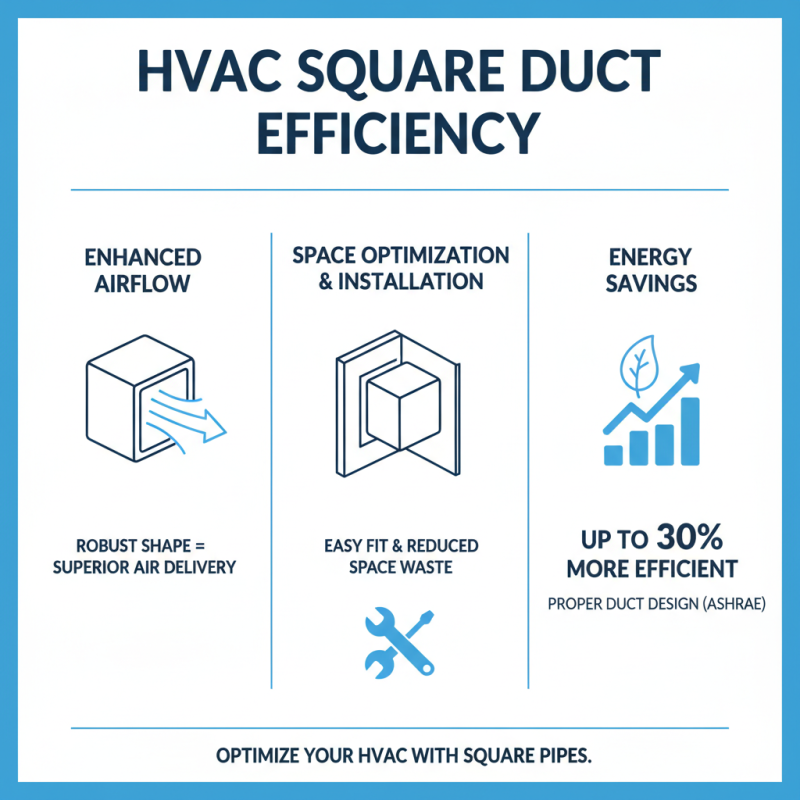
Square pipes play a vital role in HVAC systems, significantly enhancing ductwork efficiency. Their robust shape allows for superior airflow and easy installation. According to the American Society of Heating, Refrigerating and Air-Conditioning Engineers (ASHRAE), proper duct design can improve energy efficiency by up to 30%. Using square pipes can optimize space while allowing for effective air distribution.
Tip: Always calculate the right size before installation. Oversized ducts can create pressure imbalances. This can lead to increased energy costs and reduced system efficiency. Additionally, square pipes help reduce air turbulence. This further enhances airflow and minimizes noise, creating a quieter indoor environment.
Engineers must consider material choices. While galvanized steel is popular, alternatives like aluminum are lighter but may reduce durability. The decision affects the overall performance of HVAC systems. Regular maintenance is crucial. Dust and debris can accumulate in ducts, impacting efficiency. Clean ducts ensure better air quality and system longevity. Consider the long-term implications of your materials and practices. Each choice affects not just immediate performance but ongoing operational costs as well.
Aesthetic Applications of Square Pipe in Architectural Design
Square pipe has emerged as a popular choice in architectural design due to its versatility and aesthetic appeal. Its clean lines create a modern feel, enhancing the visual impact of structures. A recent report by the American Institute of Steel Construction highlights how square pipes can reduce construction waste by 20%, making them not only stylish but also sustainable. This efficiency allows architects to explore innovative designs while contributing to environmental goals.
The use of square pipes in facades and interior spaces adds a contemporary touch. Designers appreciate their ability to blend with various materials, from wood to glass. According to a survey conducted by the Design Council, about 75% of architects believe that metal elements, including square pipes, enhance the overall design quality. However, the challenge remains in integrating these elements cohesively.
Poorly executed designs can lead to unbalanced aesthetics, which can detract from the intended impact. Moreover, square pipe installations can pose unique challenges. Ensuring structural integrity while maintaining the visual game requires close collaboration between architects and engineers. The balance of form and function is critical. While square pipes offer numerous aesthetic benefits, they demand careful planning and execution.
Emphasizing the importance of both aesthetics and structural performance facilitates a more harmonious design.