Leave Your Message

10 Tips for Buying Hot Rolled Steel Coils

Buying Hot Rolled Steel Coils is not just a price comparison. A coil that arrives with the wrong grade, thickness, or edge condition can disrupt production and leave costly material unused. The World Steel Association’s October 2024 Short Range Outlook forecast global steel demand at 1,751 million tonnes in 2024, down 0.9%, followed by 1,773 million tonnes in 2025. These figures cover steel demand overall, not hot-rolled coils alone, but they show why buyers should assess market conditions alongside supplier terms.

Worldsteel Director General Edwin Basson described the 2024 outlook as “revised downwards” in the association’s October report. That reminder matters: market forecasts shift, and a quoted price can age quickly. Confirm the offer’s validity period, delivery basis, freight charges, and any price-adjustment terms. Then match the coil to the job. Check the specification, thickness and width tolerances, coil weight, inside diameter, surface requirements, and mill test documentation. Details matter. A half-millimetre mismatch may affect a forming line; unclear packaging instructions can complicate unloading.

This guide presents ten practical checks for comparing Hot Rolled Steel Coils and suppliers. Ask for written specifications, traceable certificates, and clear delivery commitments. Verify that sample documents match the material being offered. Do not rely on a broad label such as “commercial quality”; request the applicable grade and standard. Even careful buyers can miss something. Recheck the order before release, especially when production schedules are tight.
10 Tips for Buying Hot Rolled Steel Coils

Define the Application and Performance Requirements

Define the coil’s job before comparing grades. A roof deck, welded tube, truck bracket, and deep-drawn panel face different loads and forming demands. World Steel Association sector-use data places building and infrastructure at about 52% of steel use. That scale makes one point clear: “general purpose” is rarely a complete specification. State the part, forming method, service temperature, corrosion exposure, and whether the coil will be painted, galvanized, or welded.

Translate those conditions into measurable requirements. Specify grade, thickness, width, coating needs, surface quality, and allowable dimensional variation. For a bracket, tensile strength and bend performance may matter; for a formed panel, elongation and consistent thickness can prevent cracking. ASTM A1011/A1011M provides hot-rolled sheet requirements, but the applicable grade and ordering details still need checking against the part design. Measure the actual stock, too. A small thickness mismatch can disrupt a roll-forming line. Check the edge. Slitting burrs can complicate handling and joining. I would avoid choosing by strength alone: a stronger coil may be harder to form, and the cheapest specification may not survive the intended service. One detail is easy to miss: clarify the test method and acceptance limits with the supplier before placing the order.

Choose the Steel Grade, Coil Dimensions, and Surface Condition

Choose the grade for the job, not just the price. ASTM A1011/A1011M covers hot-rolled carbon and high-strength low-alloy sheet, but the grade name alone does not confirm suitability. Compare specified yield strength, tensile strength, elongation, and forming needs with your drawing. For welded parts, check whether the chemistry and thickness suit your process. Ask for a mill test certificate tied to the coil’s heat number. A mismatch can be costly.

Get the dimensions in writing: thickness, width, inside diameter, outside diameter, and maximum coil weight. Confirm tolerances against the purchase specification and the applicable standard. The World Steel Association’s World Steel in Figures 2024 reports 1,892.2 million tonnes of crude steel production in 2023. That scale is a reminder: “hot rolled” describes a broad market, not one uniform product. Small differences matter. A coil too heavy for your uncoiler, or too wide for your slitter, can disrupt a whole shift.

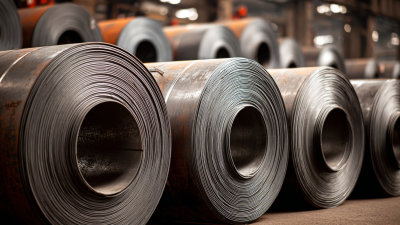
Inspect the surface requirements before dispatch. Hot-rolled coils may carry mill scale, light rust, oil, or edge irregularities; state what your process can accept. For visible or coated parts, request sample photos or an agreed inspection method. ASTM A1011/A1011M provides product requirements, but it cannot replace a clear order. I would still double-check the packaging and coil condition at receipt; paperwork can look perfect while an edge is damaged.

Compare Supplier Quality Controls and Product Certifications

A low price can hide uneven thickness, weak traceability, or inconsistent surface quality. When comparing hot rolled steel coil suppliers, ask how each controls the product from production through shipment. Request the inspection plan, sampling frequency, and records for thickness, width, flatness, and visible defects. Check whether measuring equipment is calibrated and how out-of-spec coils are identified. Look closer.

Review the mill test certificate for the coil’s heat number, chemical composition, and mechanical test results. The heat number should match the coil tag and shipping documents, not just appear on a generic form. Confirm that any product certifications apply to the grade and production site you are buying. A certificate can look impressive while covering a different product range. Ask the supplier to explain its scope and show current supporting records.

Good quality control also includes a clear process for complaints and corrective action. Ask what happens when a customer finds edge cracks or thickness variation, and how affected coils are traced. If possible, compare a sample coil’s tag, test documents, and measured dimensions before placing a large order. I have seen buyers focus heavily on certificates and overlook packaging or handling records; that is an easy gap to miss. Check how coils are protected from moisture and impact during storage and transport.

10 Tips for Buying Hot Rolled Steel Coils - Compare Supplier Quality Controls and Product Certifications

# What to Check Quality Controls to Compare Documents or Standards to Review Practical Verification
1 Grade and intended application Confirm that the offered steel grade, intended forming or structural use, and required mechanical properties match the purchase specification. Applicable product standard and the order specification. Examples include ASTM A1011/A1011M for hot-rolled carbon and structural steel sheet and strip, or EN 10111 for continuously hot-rolled low-carbon steel sheet and strip for cold forming. Check the exact grade designation and standard edition on the quotation, order confirmation, and test documents.
2 Chemical composition Compare the supplier’s control of heat chemistry and the reported values for the elements specified for the grade. Mill test report or inspection certificate showing heat identification and chemical analysis, where required by the order. Verify that reported results meet the limits in the specified standard or agreed purchase specification.
3 Mechanical properties Ask how tensile properties are tested and how results are linked to the coil or production batch. Test results for properties required by the applicable grade specification, such as yield strength, tensile strength, and elongation when specified. Confirm that test values, units, test direction, and sampling basis are consistent with the specification.
4 Thickness and width tolerances Compare measurement methods, inspection frequency, and control of variation across the coil width and length. Applicable dimensional tolerances in the product standard or purchase specification; inspection records if agreed. State nominal dimensions and permitted tolerances clearly, and agree how measurements will be taken.
5 Surface condition and edge quality Agree how surface defects, scale, edge condition, and any required surface finish will be assessed and accepted. Written surface-quality requirements, defect limits, and any agreed inspection or acceptance criteria. Request representative, traceable inspection images or samples when appearance is important to the end use.
6 Traceability and coil identification Check that each coil can be linked to its heat or batch, test results, production records, and shipping documents. Coil labels, packing list, and mill test documentation with matching identification numbers. Compare identifiers across the coil tag, certificate, invoice, and packing list before accepting delivery.
7 Quality management certification Review whether the supplier operates a documented quality management system and whether its certified scope covers the relevant activities. For example, an ISO 9001 certificate issued by an accredited certification body. ISO 9001 certifies a management system, not the conformity of each coil. Check the certificate’s validity, site, scope, and certification body with the issuing body or its public directory.
8 Industry-specific requirements For regulated or demanding applications, compare process controls, approval requirements, and any customer-specific requirements. IATF 16949 may be relevant to automotive supply chains; it is a quality management system standard, not a product certificate or a substitute for grade testing. Confirm that the certified site and scope apply to the product and supply route being quoted, and check any required customer approval separately.
9 Inspection and test documentation Agree before ordering which tests, inspection documents, and independent checks are required, and who will perform them. Where specified, agree the inspection document type under EN 10204, such as 3.1 or 3.2, and define the required contents in the contract. Ensure the document type, inspection responsibility, sampling, and delivery timing are stated in the purchase order.
10 Nonconformance handling and delivery protection Compare the supplier’s process for reporting defects, investigating causes, corrective action, and protecting coils during storage and transport. Written complaint and corrective-action procedure, agreed packaging requirements, and clear delivery and claim terms. Record coil condition and identification at receipt, and agree notification deadlines and evidence requirements before purchase.

Assess Pricing, Lead Times, Packaging, and Delivery Options

Separate the mill price from the landed cost when comparing hot rolled coil offers. Ask whether the quote includes cutting, export packing, port handling, inland transport, and storage. Confirm thickness, width, weight range, and edge-condition tolerances in writing. Small gaps matter.

The World Steel Association’s October 2024 Short Range Outlook projected global steel demand of 1.75 billion tonnes in 2024 and 1.77 billion in 2025. These figures do not predict an individual supplier’s next price. Still, they show why quotes need clear validity dates. Request the currency, surcharge basis, payment milestones, and delivery terms. Compare the cost per usable tonne, not simply the quoted tonne. One missed charge can erase an apparent saving.

Break the lead time into production, loading, transit, and delivery. UNCTAD’s Review of Maritime Transport 2024 reported that container spot rates on several major routes more than doubled between late 2023 and mid-2024. This matters if your coils travel by container; confirm the assumed route and booking date. Specify coil orientation, moisture-resistant wrapping, rust protection, steel straps, and labeled coil IDs. Take dispatch photos. They help document damage, but cannot prevent it. Confirm unloading equipment, delivery appointments, and responsibility for delays. A weak point in many plans: even sound packaging may not protect exposed edges during rainy-yard unloading.

Hot Rolled Steel Coil Buying: Indicative Lead-Time Planning

Estimated midpoint of typical planning ranges, in business days

Indicative ranges: supplier quotation, 1–3 days; preparation and dispatch of stock coils, 3–7 days; mill production, 20–45 days; domestic trucking, 1–5 days; and ocean freight, 15–35 days. Actual timing varies by specification, availability, route, and season. Confirm the quoted schedule, packaging requirements, and delivery terms before ordering.

Verify Coil Condition and Order Details Before Purchase

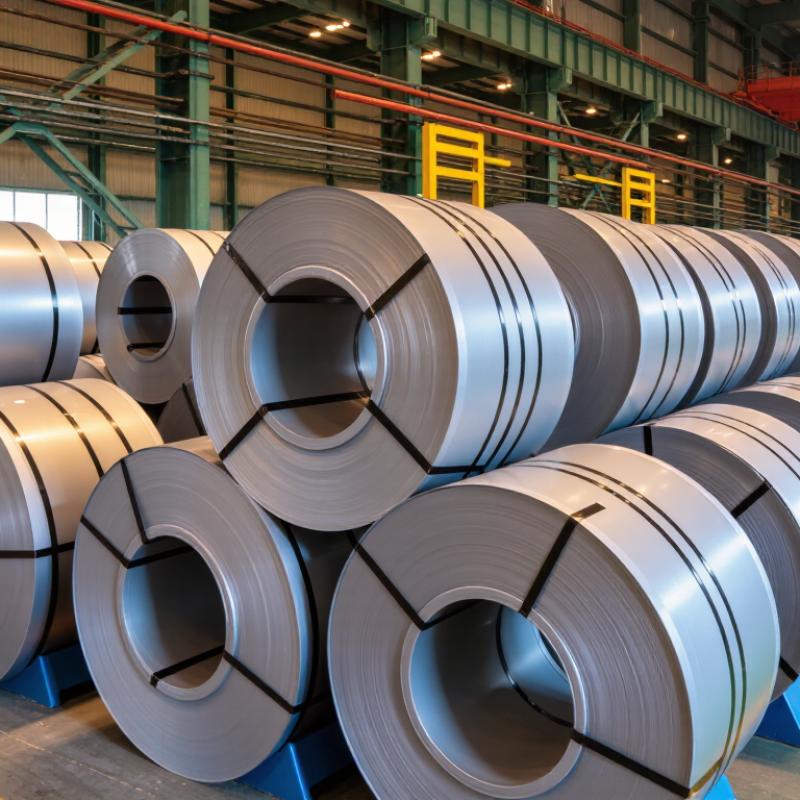
Before approving a hot rolled steel coil, inspect the surface and edges under good light. Look for deep rust, water staining, cracks, dents, and damaged or loose bands. Light discoloration may be manageable, but heavy corrosion can affect processing and should be discussed before shipment. Look closely.

Check whether the coil is round and stable, without severe telescoping or crushed edges. Ask for recent photos that show the outer wraps, coil eye, and packaging. Photos help, but they cannot replace an inspection when the order is large or the condition is uncertain. Keep records.

Match the order confirmation to your requirements: steel grade, thickness, width, coil weight, inner and outer diameters, quantity, and tolerances. Review the mill test certificate and confirm that its heat number corresponds to the material being supplied. Also verify the agreed surface condition, packing method, and delivery schedule. A mismatch in one measurement can disrupt slitting or forming. It is easy to focus on price and overlook these details; I would rather pause and clarify than assume a specification is understood. If a term seems vague, request written confirmation before payment or dispatch.