How to Choose a Reliable Structural Steel Supplier?
Choosing a reliable Structural Steel supplier is not merely a pricing exercise. It is a decision that affects safety, schedule, budget, and long-term performance. The right supplier should provide consistent material, accurate documentation, and clear communication from inquiry to delivery.
Fazlur Rahman Khan, a pioneering structural engineer, once said, “The technical man must be judged by what he does, not by what he knows.” His words remain valuable when assessing suppliers. A company may claim expertise, yet practical evidence matters more. Buyers should review mill certificates, chemical test results, dimensional tolerances, welding procedures, and quality-control records. These details reveal whether promises are supported by repeatable processes.
Reliable suppliers also explain their production capacity and delivery limits honestly. They should identify the steel grade, applicable standards, inspection method, and traceability system before an order is placed. Visit their facility when possible. Observe storage conditions, lifting practices, labeling, and material protection. Rust, mixed batches, or unclear markings deserve attention.
Cost still matters. However, the lowest quotation can hide delays, rework, or incomplete documentation. No checklist is perfect. A supplier with excellent paperwork may still communicate poorly during pressure. Conversely, a smaller supplier may offer stronger attention and limited capacity. That tension requires careful judgment. Ask for comparable project references, verify them, and record every technical agreement. The strongest choice is not always the largest company. It is the supplier that consistently turns verified specifications into dependable Structural Steel, delivered when the project needs it.
Define Your Structural Steel Requirements
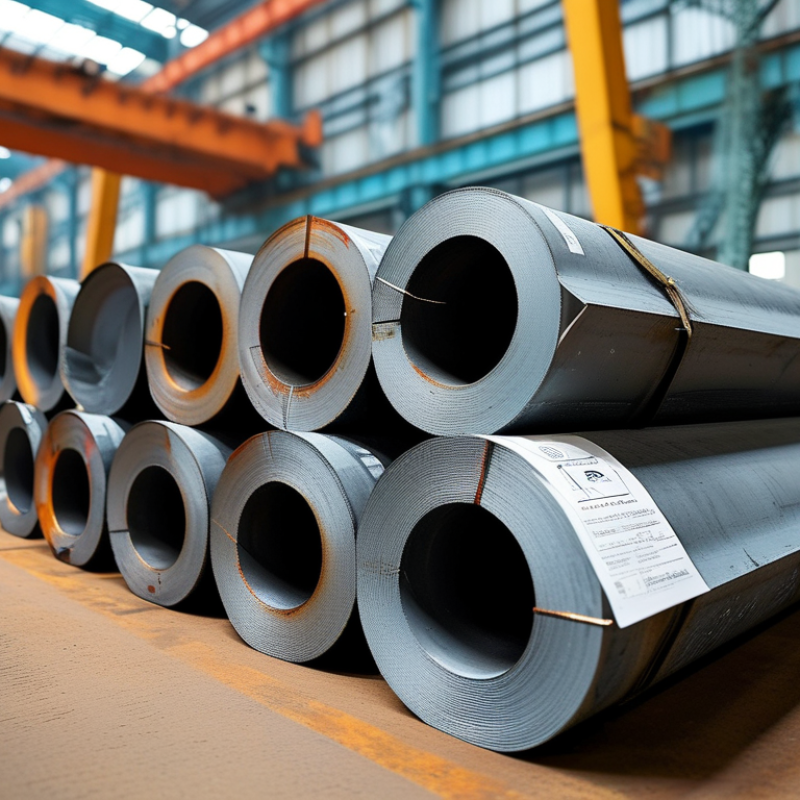
Defining structural steel requirements begins with the load path, not the supplier’s catalogue. Record the building use, design loads, span lengths, connection types, fire rating, and expected service life. Specify the steel grade, section sizes, plate thicknesses, surface treatment, and permitted dimensional tolerances. Small omissions become expensive later.
The World Steel Association reported 1.89 billion tonnes of crude steel production in 2023. That scale does not guarantee consistent structural quality. Ask for heat numbers, mill certificates, chemical test results, and mechanical test data for every batch. Confirm that documents match the applicable design standard, such as ASTM, EN, or an equivalent national specification. Require independent inspection when the project carries unusual risks.
Think about the site, too. A coastal project may need stronger corrosion protection than an enclosed warehouse. Check maximum bundle weights, delivery sequencing, unloading space, and replacement procedures for damaged members. The supplier should explain how it controls cutting, drilling, welding, marking, and storage. AISC 360-22 and ISO 9001 offer useful reference points, but certificates alone are not proof of dependable performance. I have seen paperwork look complete while dimensions still needed checking. Measure critical pieces before installation. Then revise the purchasing specification when practical experience exposes a weak assumption.
Verify Supplier Qualifications and Industry Experience
How to Choose a Reliable Structural Steel Supplier?
Verify Supplier Qualifications and Industry Experience
A reliable supplier should prove more than a low quotation. Ask for business registration, ISO 9001 certification, welding qualifications, insurance, and recent project references. The World Steel Association reported 1.89 billion tonnes of crude steel production in 2023. That scale creates wide differences in quality, traceability, and delivery control. Request mill test certificates, heat numbers, chemical results, and mechanical test values for every batch. Then compare them with your project specification.
Experience must match your structure. A supplier skilled in warehouse frames may lack expertise in bridges, high-rise buildings, or seismic detailing. Review photographs, fabrication records, nonconformance reports, and inspection procedures. OECD Steel Market Developments reports continued global steel overcapacity and uneven demand. This makes supplier stability worth checking. Examine audited financial information, production capacity, equipment maintenance, and realistic lead times. A polished certificate is not final proof. Documents can be outdated or incomplete.
Tips: Call one former client. Ask whether deliveries arrived complete and on time. Check heat numbers on physical materials. Confirm that independent inspectors can access the workshop. Ask for a sample inspection and testing plan before signing. Do not accept vague claims such as “international quality.” I would also record unanswered questions. That small record may reveal weak communication, although it is not a perfect test.
Evaluate Steel Quality, Standards, and Traceability
How to Choose a Reliable Structural Steel Supplier?
A reliable supplier should prove quality through records, not confident promises. The World Steel Association reported 1.89 billion tonnes of crude steel production in 2023. That scale makes consistent sourcing and material control essential. Ask which mill produced the steel, which standard applies, and how each batch is identified.
Check the grade against project specifications, such as ASTM or EN requirements. Confirm yield strength, tensile strength, elongation, and impact values on the mill test certificate. For higher-risk structures, request an EN 10204 3.1 certificate and independent testing. A heat number should appear on the certificate, bundle tag, and physical material. Traceability should survive cutting and delivery.
Look closely at the paperwork. The ISO Survey 2022 recorded more than 1.26 million ISO 9001 certificates worldwide, but certification alone does not guarantee suitable steel. I treat it as evidence, not proof. Verify certificate numbers with the issuing mill when possible. Ask for calibration records, inspection procedures, and nonconformance reports. For thick plates, ultrasonic testing may reveal internal flaws invisible at the surface. Rust on a damp bundle is also a warning, though not every stain means structural failure. I have seen suppliers provide complete documents while leaving one heat number unreadable. That small gap deserves attention. Reliability is often visible in such details.
Compare Production Capacity, Pricing, and Delivery Terms
A reliable structural steel supplier should be measured against your project schedule, not only a low quotation. The World Steel Association reported 1,882.6 million tonnes of global crude steel production in 2024. Large output, however, does not prove available capacity. Ask for monthly rolling capacity, current utilization, and recent shipment records. Check whether the supplier can produce your required sections, grades, welding standards, and inspection documents. Request a production plan with steelmaking, cutting, fabrication, coating, and packing dates.
Pricing needs a clear breakdown. Compare the steel index basis, fabrication hours, surface treatment, packaging, inland transport, and ocean freight separately. The World Bank’s Commodity Markets Outlook shows that industrial commodity prices can change sharply across forecast periods. A fixed price may protect your budget, but only if validity, adjustment triggers, and currency terms are written clearly. The cheapest offer can hide exclusions. Ask about mill certificates, third-party inspection, rework, and storage fees. I would also compare at least three equivalent bills of materials. Otherwise, the comparison is weak.
Delivery terms deserve equal attention. UNCTAD’s Review of Maritime Transport 2024 reported continuing disruption risks across major shipping routes, including longer transit times and higher costs. Require an Incoterm, named loading port, estimated sailing window, and responsibility for customs documents. Use milestone payments linked to inspection and packing evidence. A practical warning: promised delivery dates are often optimistic. Build buffer time for approval delays, port congestion, and remanufacturing. Good suppliers disclose these risks early. That transparency is valuable.
How to Choose a Reliable Structural Steel Supplier?
Compare production capacity, indicative structural steel pricing, and standard delivery lead time before selecting a supplier.
The benchmark uses anonymous supplier profiles and typical non-branded market ranges: higher production capacity may support larger projects, while lower pricing and shorter lead times can improve purchasing efficiency. Actual quotations should be verified against steel grade, section size, quantity, Incoterms, inspection requirements, and destination.