Leave Your Message

2026 Best Stainless Steel Plate Suppliers for Global Buyers?

Choosing a stainless steel plate supplier in 2026 takes more than comparing price lists. Global buyers need consistent material quality, clear documentation, and delivery terms that match the project. A plate may look flawless under warehouse lights, yet still miss the required thickness or grade. Small details matter.

This guide examines suppliers through practical checks: available grades, dimensional tolerances, surface finish, production capacity, and export experience. Buyers should request current mill test certificates and confirm that heat numbers match the delivered plates. Ask how the supplier handles inspection, protective packaging, and transit damage. Check lead times in writing. A polished website is not proof of reliable service.

The right choice depends on the application. A fabricator ordering standard sheets has different needs from a project team sourcing heavy plate for demanding equipment. Compare quotations on the same grade, dimensions, finish, and delivery basis; otherwise, the lowest figure can mislead. References from comparable buyers can help, though they are not a guarantee. No shortlist is perfect. Supplier data may be incomplete, and stated capacity can change with demand. This overview offers a starting point, not a substitute for independent verification. Before placing an order, confirm specifications directly and assess whether the supplier can provide the traceability and support your project requires.
2026 Best Stainless Steel Plate Suppliers for Global Buyers?

Stainless Steel Plate Basics: ASTM A240 Covers 70+ Chromium-Nickel Grades

ASTM A240/A240M is a key specification buyers encounter when sourcing stainless steel plate, sheet, and strip. It covers many grades, including widely used chromium-nickel alloys such as 304 and 316. The title may suggest a simple catalog, but grade lists and requirements can vary by edition. Check the applicable revision and product form before comparing offers.

For a practical review, match the grade to the service conditions. A plate near a washdown line may need different corrosion resistance than one used in a heated process area. Chromium supports corrosion resistance; nickel helps stabilize the austenitic structure in common chromium-nickel grades. Molybdenum in grades such as 316 can improve resistance to certain corrosive environments, but it does not make the material immune to corrosion. Details matter.

Ask for the material test report, heat number traceability, thickness tolerance, and surface finish. Verify that the certificate identifies the ordered grade and applicable specification. A240 compliance alone does not settle every fabrication or service question. I have seen purchasing comparisons focus too heavily on grade names; that is an easy mistake. Confirming the actual operating environment is less tidy, but more useful.

Supplier Qualification: Compare Mill Capacity, Certifications, and Traceability

For global buyers, supplier qualification starts with the mill, not the quotation. The International Stainless Steel Forum reported 58.4 million tonnes of stainless steel melt-shop production in 2023, a 4.6% increase over 2022. That scale makes capacity worth checking: ask whether the quoted plate comes from the supplier’s own rolling operations or an external mill. Then compare available thicknesses, widths, monthly output, and lead times against your actual order pattern. A large nameplate capacity does not guarantee a slot when maintenance or other orders intervene. Ask for a recent production schedule. Get specific.

Certifications help, but they are not a substitute for evidence tied to the plate. Request current quality-system certificates, the applicable material specification, and inspection records for the ordered grade and dimensions. Traceability should connect each plate to its heat number, test certificate, and shipment documents; check that the markings remain legible after cutting or repacking. For a practical test, select a sample heat number and follow it through the records. Does every document agree? Gaps matter. I would also check how the supplier handles nonconforming material and delayed orders. Paperwork can look perfect, and still leave awkward questions about outsourced processing or mixed batches. That part deserves a second look.

2026 Best Stainless Steel Plate Suppliers for Global Buyers?

Supplier Qualification: Compare Mill Capacity, Certifications, and Traceability

Common plate-grade benchmarks: 304 and 316 have minimum tensile strength of 515 MPa and yield strength of 205 MPa; 430 has minimum tensile strength of 450 MPa and yield strength of 205 MPa. These are specification minimums, not supplier performance data. Verify the applicable standard, product form, thickness, and test certificate for each order; assess mill capacity, certifications, and heat-level traceability separately.

Global Market Context: Stainless Crude Steel Output Reached 58.4 Mt in 2023

2026 Best Stainless Steel Plate Suppliers for Global Buyers?

Global Market Context: Stainless Crude Steel Output Reached 58.4 Mt in 2023

Global stainless crude steel output reached 58.4 million tonnes in 2023, according to industry figures. That scale signals a broad production base, but it does not guarantee that every plate grade or thickness is readily available. Buyers still need to check mill capacity, regional inventories, and delivery times. A large market can hide local shortages.

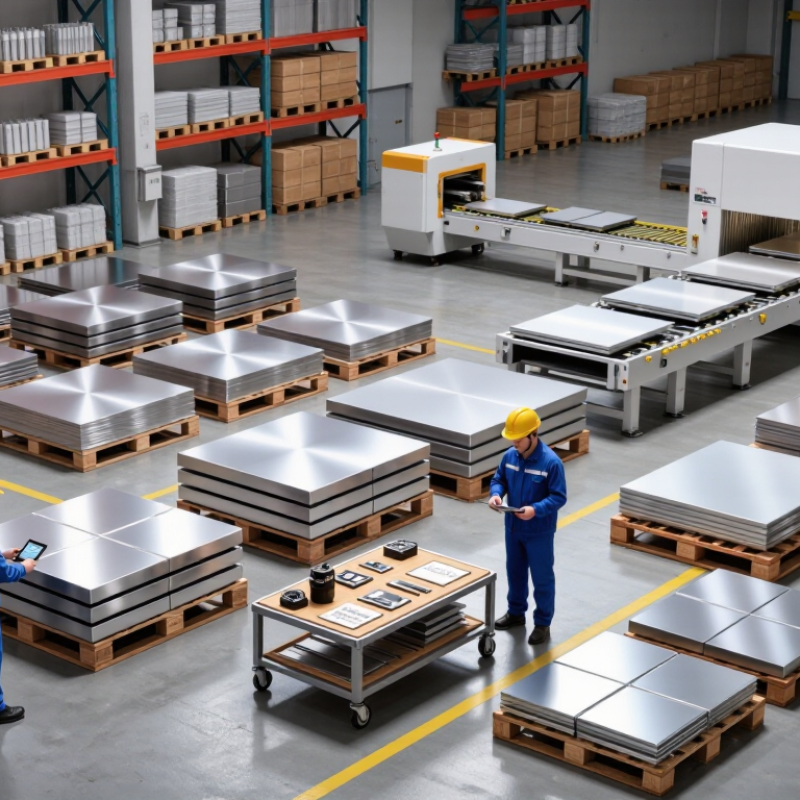
When comparing suppliers, ask for the material grade, thickness tolerance, surface finish, and inspection documents before requesting a firm delivery date. These details matter on a shop floor: a plate that arrives too thick may require extra machining, while a finish mismatch can delay fabrication. Confirm how the supplier handles packing and transit protection, too. Salt air and rough handling leave marks. It is easy to overlook packaging.

Tips: Request a recent inspection report and verify that its heat number matches the plate markings. Compare quotations on the same grade, dimensions, and delivery terms. Treat unusually short lead times as a question to investigate, not proof of better service. Even careful checks cannot remove every delay, so allow room for schedule changes.

Technical Comparison: Match Grade, Thickness, Finish, and Corrosion Resistance

2026 Best Stainless Steel Plate Suppliers for Global Buyers?

Choosing a supplier starts with the service environment, not a polished catalog. Grade 304 often suits dry indoor equipment, while 316 offers better resistance to chlorides in coastal or washdown settings. Neither grade is universal. A plate exposed to warm saltwater may still pit, especially where deposits collect or cleaning is inconsistent. Ask for mill test certificates and confirm the grade matches the heat number on the material.

Thickness affects more than strength. It changes plate weight, forming behavior, welding distortion, and the finished part’s cost. Compare the specified thickness with the applicable tolerance, rather than relying on a nominal figure alone. For a tank wall, request details on flatness and edge condition too. Small deviations matter. A supplier should explain available gauges and provide traceable inspection records, but paperwork cannot replace a clear specification.

Finish is a corrosion variable, not just an appearance choice. Rough surfaces can hold contaminants; a smoother finish may help cleaning, though it does not fix poor design or unsuitable grade. Specify the finish by a recognized roughness value when it matters, and state whether the surface is measured before or after processing. Ask how samples are checked. Then compare lead time, packaging, and inspection scope alongside price. I would still verify a sample before placing a large order; finish descriptions can be vague.

2026 Best Stainless Steel Plate Suppliers for Global Buyers? - Technical Comparison: Match Grade, Thickness, Finish, and Corrosion Resistance
Material / Grade Typical Thickness Common Finishes Corrosion Resistance Typical Applications Buyer Verification Points
Austenitic 304 / 304L (UNS S30400 / S30403) Common plate ranges vary by mill and product specification; confirm the available range and tolerances with the supplier. Hot-rolled, pickled, and annealed; cold-rolled finishes may be available in thinner gauges. Good general resistance in many indoor, food-processing, and mildly corrosive environments. Not usually the preferred choice for sustained exposure to seawater or chloride-rich conditions. Food equipment, tanks, architectural components, and general fabrication. Check the applicable ASTM or EN product specification, grade designation, heat number traceability, surface condition, and thickness tolerances.
Austenitic 316 / 316L (UNS S31600 / S31603) Available thickness depends on the producer, standard, and plate dimensions; request a current size list. Hot-rolled and pickled; other finishes are subject to thickness and mill capability. Typically offers better resistance to pitting and crevice corrosion in chloride-bearing environments than 304, but suitability depends on concentration, temperature, and exposure. Marine equipment, chemical processing, coastal structures, and process vessels. Verify grade and molybdenum content through the material test certificate; assess the service environment rather than relying on grade alone.
Ferritic 430 (UNS S43000) Often supplied in sheet and thinner plate products; confirm whether the requested thickness is available as plate. Commonly supplied with a smooth cold-rolled finish; finish options depend on product form. Suitable for many indoor and mildly corrosive applications. Generally less resistant to chloride exposure and severe environments than 304 or 316. Appliance panels, interior trim, and decorative applications. Confirm product form, magnetic properties where relevant, surface finish, and applicable product standard.
Duplex 2205 (UNS S32205 / S31803) Heavy plate availability and dimensions vary by mill; confirm supply route, tolerances, and any processing requirements. Typically supplied hot-rolled and pickled; surface condition should be specified in the purchase order. High strength and generally strong resistance to chloride-related pitting and stress corrosion cracking compared with common austenitic grades; verify suitability for the specific service conditions. Offshore structures, pressure equipment, desalination, and chemical processing. Check the exact duplex designation, solution-annealed condition, test certificate, mechanical properties, and any required corrosion testing.
Precipitation-hardening 17-4 PH (UNS S17400) Plate sizes and thicknesses are producer-dependent; confirm availability in the required heat-treatment condition. Surface condition and finishing route depend on the supplied product form and specification. Provides useful corrosion resistance in many industrial settings, but should not be treated as interchangeable with 316L in chloride-rich environments. High-strength components, valves, shafts, and industrial machinery. Specify the required condition, such as solution-treated or aged, and verify mechanical properties and certification against the governing specification.

Global Purchasing: Assess Lead Times, Logistics, Duties, and Total Landed Cost

For global buyers comparing stainless steel plate suppliers, the quoted price is only one part of the decision. Ask for the production window, inspection date, and port-ready date in writing. A plate that is ready in three weeks may still spend weeks in transit or awaiting clearance. The World Bank’s 2023 Logistics Performance Index reports an average of 44 days for international shipments to travel from origin warehouse to destination warehouse. That is an average, not a promise for your route. Build a buffer.

Request a landed-cost estimate that separates plate price, inland haulage, ocean freight, insurance, duties, terminal handling, and delivery to your facility. Check the assumed port, currency, shipment size, and trade term; a low freight estimate can hide charges at destination.

For each supplier, compare the same grade, dimensions, tolerances, packing method, and inspection scope. Ask how sheets are protected against moisture and edge damage. Small details matter when a bundle arrives with wet wrapping.

Keep a contingency for schedule changes and freight movements. UNCTAD’s Review of Maritime Transport 2024 describes how disruption and longer routes can increase shipping distance, time, and costs. Recheck quotations near booking, and confirm who pays each charge. This process is not perfect: estimates can miss local fees, and customs processing varies. Record the assumptions anyway. A clear comparison beats a precise-looking total built on guesses.