China’s structural steel industry operates at a scale few markets can match. The World Steel Association reported that China produced about 1.02 billion tonnes of crude steel in 2023, representing more than half of global output. This scale supports major construction, bridge, shipbuilding, and energy projects. It also makes supplier selection more complicated.
The World Steel Association’s World Steel in Figures 2024 identifies China Baowu Steel Group as the world’s largest crude steel producer, based on 2023 production data. Other influential producers include HBIS Group, Ansteel Group, Shagang Group, and China Jianlong. Their capabilities differ. Some prioritize integrated production, while others focus on specialized grades, export services, or regional delivery. “Large” does not always mean “best.”
This article examines the leading Chinese manufacturers through practical criteria. These include annual capacity, product range, quality systems, project experience, export reach, and traceability. For buyers, mill certificates, test reports, and compliance with standards such as ASTM, EN, and GB/T deserve close review. A modern rolling line may produce consistent beams, plates, and hollow sections. Yet performance still depends on inspection discipline and finishing quality.
Data can lag reality. Company rankings may change after mergers, capacity adjustments, or market downturns. The World Steel Association and company disclosures remain useful starting points, but independent verification is essential. This overview therefore avoids treating production volume as a complete measure of reliability. The strongest manufacturer is the one matching the project’s engineering, delivery, and compliance requirements.
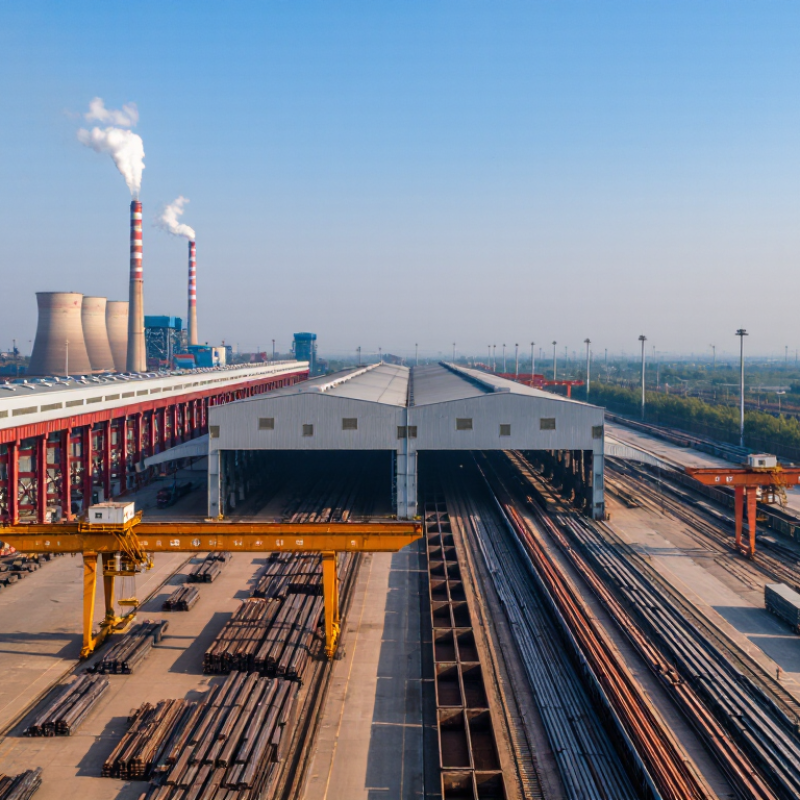
China’s structural steel manufacturing industry is defined by scale, process control, and project capability. The World Steel Association reported China’s crude steel output at about 1.005 billion tonnes in 2024. This volume supports bridges, stadiums, factories, warehouses, and high-rise buildings. However, crude steel capacity does not automatically prove structural steel expertise. Leading manufacturers must show stable rolling quality, accurate fabrication, welding control, and traceable inspection records.
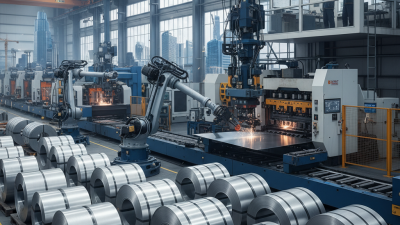
Manufacturers serving serious construction projects usually work against Chinese GB standards, project specifications, and international requirements when required. Their factories may include automated cutting lines, shot-blasting equipment, welding stations, and ultrasonic testing. The China Steel Construction Society frequently highlights digital fabrication and prefabrication as important industry directions. In practice, this means fewer site adjustments and more predictable installation. Still, factory brochures can overstate capability. A site audit often reveals the difference between equipment ownership and real production experience. That difference matters.
Tips: Compare annual structural steel output, not only total steel capacity. Request mill certificates, weld inspection records, coating reports, and recent project references. Check whether quality staff control subcontractors. Ask how defects are corrected. The best answer is rarely the longest one.
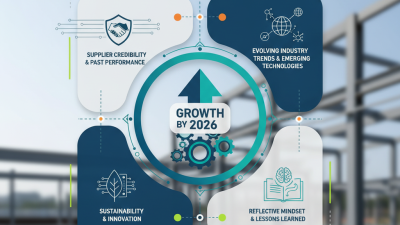
China’s manufacturers also face pressure from lower construction demand, carbon targets, and volatile raw-material prices. These pressures may improve efficiency, but they can also encourage aggressive pricing. Buyers should examine delivery history, engineering support, and contingency planning before selecting a supplier. Price is useful. It is not enough.
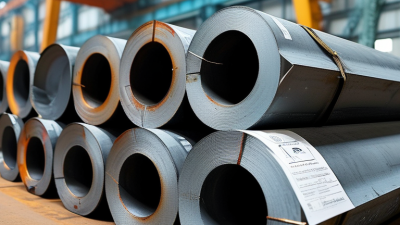
When evaluating structural steel manufacturers in China, start with verifiable production evidence. A reliable supplier should provide recent mill test certificates, heat numbers, and inspection records. These documents connect each beam, plate, or column to its manufacturing batch. Check whether chemical composition, yield strength, tensile strength, and elongation meet the project specification. Documents matter.
Independent inspection can confirm more than a polished website. Ask inspectors to review ultrasonic testing, dimensional tolerances, surface defects, and welding procedures. A factory visit may reveal useful details, such as organized storage, calibrated equipment, and clear material labels. Capacity alone is not enough. Review monthly output against your required volume and delivery schedule. Also examine the manufacturer’s experience with comparable structures, especially heavy sections and complex connections.
Cost should be assessed through delivered value, not unit price alone. Compare steel cost, processing, testing, packaging, inland transport, and port handling. Confirm how the manufacturer protects edges from impact and prevents moisture damage during shipment. Lead times must reflect realistic production capacity, not optimistic sales promises. Project reviews often show that overlooked communication gaps create expensive delays. One missed drawing revision can affect an entire fabrication sequence. Leave room for corrective action, even after technical approval. This may feel cautious, but steel quality depends on consistent evidence, controlled processes, and honest communication.
Minimum yield strength is a practical technical benchmark when evaluating structural steel suppliers. The values shown represent commonly specified Chinese structural steel grades for thicknesses up to 16 mm, based on GB/T 700 and GB/T 1591. Higher-strength grades can support more demanding structural applications, but quality evaluation should also consider certification, dimensional tolerance, weldability, inspection records, and delivery reliability.
China’s leading structural steel manufacturers combine large-scale melting, rolling, testing, and fabrication capabilities. World Steel Association’s World Steel in Figures 2024 reports that China produced about 1.019 billion tonnes of crude steel in 2023. This scale supports dependable supply for bridges, warehouses, power stations, and high-rise frames.
The strongest manufacturers are not judged by volume alone. Buyers should examine structural grades, rolling accuracy, welding performance, and delivery records. Many qualified producers provide mill test certificates, heat-number traceability, ultrasonic inspection, and dimensional reports. These details matter when a beam arrives with a 20-millimetre flange or a plate exceeds several metres in length. ISO 9001 systems and compliance with standards such as GB/T, EN, or ASTM can also improve procurement confidence.
Industry reports from the OECD and the World Steel Association continue to highlight pressure from excess capacity and weaker construction demand. That makes supplier evaluation more important. A low quotation may hide longer lead times, inconsistent coating thickness, or limited after-sales support. I would compare at least three factories using the same specification sheet. Ask for recent inspection records, production photographs, and export references. A factory may appear impressive during a visit, yet its subcontracting practices remain unclear. This is where many online rankings become less reliable. Availability also changes quickly with regional demand, raw-material prices, and port schedules.
| Manufacturing Capability | Typical Structural Products | Common Size or Thickness Range | Common Chinese Standard | Typical Steel Grades | Primary Manufacturing Process | Typical Quality-Control Requirements |
|---|---|---|---|---|---|---|
| Wide-Flange and H-Section Production | H-beams, wide-flange columns, welded or rolled building sections | Approximately 100–900 mm section depth; dimensions depend on the rolling mill and section series | GB/T 11263 | Q235B, Q355B, Q355C, Q355D | Continuous or reversing hot rolling, followed by cooling, straightening, cutting, and dimensional inspection | Chemical analysis, tensile testing, yield-strength verification, elongation testing, impact testing where specified, and ultrasonic inspection when required |
| Hot-Rolled Angle, Channel, and I-Section Production | Equal angles, unequal angles, channels, I-beams, bracing and connection members | Commonly supplied in standard section sizes from approximately 50 mm to 630 mm, depending on the profile | GB/T 706 | Q235B, Q355B, Q355C, Q355D | Billet reheating, hot rolling through shaped passes, cooling, straightening, and fixed-length cutting | Dimensional tolerances, surface-condition checks, mechanical testing, heat-number traceability, and verification of chemical composition |
| Structural Steel Plate Manufacturing | Plates for bridges, industrial buildings, towers, heavy equipment, and welded structures | Typical commercial thicknesses range from approximately 6 mm to more than 100 mm; maximum dimensions vary by plate mill | GB/T 1591 | Q355B, Q355C, Q355D, Q390, Q420, Q460 | Slab reheating, controlled hot rolling or normalizing, accelerated cooling when required, and cutting to ordered dimensions | Tensile and impact tests, thickness and flatness checks, surface inspection, ultrasonic testing for critical applications, and through-thickness testing when specified |
| Welded Box and Built-Up Section Fabrication | Box columns, built-up beams, transfer girders, crane girders, and large-span members | Custom width, depth, and thickness; commonly produced from plates from approximately 6 mm upward | GB/T 1591 for steel plate; JGJ 81 for welding practice in building steel structures | Q355B, Q355C, Q355D, Q420, Q460 | Plate leveling, CNC cutting, edge preparation, submerged-arc or gas-shielded welding, straightening, and dimensional correction | Welding-procedure qualification, welder qualification, visual inspection, radiographic or ultrasonic testing, weld-size checks, and dimensional inspection |
| Weathering Structural Steel Supply | Atmospheric-corrosion-resistant plates and sections for bridges, façades, and exposed structures | Available as plate and selected rolled sections; thickness and profile availability depend on the production line | GB/T 4171 | Q355NH, Q355GNH, Q460NH and other specified weathering grades | Controlled alloying and hot rolling, with optional normalizing or accelerated cooling depending on grade and thickness | Atmospheric-corrosion-resistant chemical composition, tensile properties, impact performance, surface inspection, and certificate traceability |
| Low-Temperature Structural Steel Production | Steel for cold-region buildings, bridges, offshore facilities, and heavy welded structures | Usually supplied as plate or sections in thicknesses and sizes agreed in the purchase specification | GB/T 1591 and applicable project specifications | Q355C, Q355D, Q355E, Q390D, Q420D, Q460D | Clean-steel production, controlled rolling, normalizing or thermomechanical processing, followed by controlled cooling | Charpy impact testing at the specified temperature, tensile testing, weldability review, ultrasonic testing where required, and full material traceability |
| Export-Oriented Structural Steel Supply | Sections and plates manufactured for projects using Chinese, European, American, or other international specifications | Size and thickness are produced against the selected standard and project drawings | GB/T 11263, GB/T 706, GB/T 1591, EN 10025, ASTM A6, or project-specific specifications | Q355 series, S355 series, ASTM A572 Grade 50, and other contract-approved equivalents | Hot rolling, controlled rolling, plate processing, CNC cutting, fabrication, and export packing | Mill test certificates, third-party inspection when requested, dimensional reports, heat-number traceability, packing inspection, and compliance documentation |
China’s leading structural steel manufacturers are typically integrated producers with rolling, fabrication, and testing facilities. The World Steel Association reported 1,005.1 million tonnes of crude steel production in China in 2024, representing about 53% of global output. This scale supports stable supply for H-beams, I-sections, steel plates, box columns, welded girders, and prefabricated building frames.
Capacity is not everything. Strong manufacturers combine BOF or EAF steelmaking with continuous casting and controlled rolling. Thermo-mechanical controlled processing improves strength while reducing unnecessary weight. Modern plants also use CNC cutting, robotic welding, ultrasonic inspection, shot blasting, and automated coating lines. Many facilities work against GB/T 700, GB/T 1591, ISO 3834, or project-specific EN requirements. Production records should show heat numbers, mill certificates, weld procedures, and inspection results. Traceability matters.
Large factories may process hundreds of thousands of tonnes of fabricated steel annually, but published capacity can be difficult to compare. Some figures describe crude steel, while others cover finished sections or fabricated components. That distinction is often overlooked. Buyers should inspect plate thickness ranges, maximum component dimensions, welding qualifications, coating systems, and monthly delivery performance. BIM coordination and digital production tracking are valuable for complex stadiums, bridges, warehouses, and industrial platforms. Yet technology does not remove every risk. Human inspection still catches dimensional errors that software may miss. Industry reports provide useful scale, but verified plant audits remain more reliable.
China produced about 1,005 million tonnes of crude steel in 2024, according to the World Steel Association. This represented more than half of global output. The scale is impressive, but capacity alone does not prove reliability. Select a manufacturer that can match your required grade, section size, tolerance, coating, and delivery schedule. Ask for recent mill test certificates, heat-number traceability, and production photos showing real stock. Verify whether the certificates match the supplied batch. Small details matter.
Tips: Request a sample inspection before signing a large order. Check ISO 9001 certification, but do not treat it as product proof. It confirms a management system, not perfect steel. For structural projects, review applicable standards such as EN 10025, ASTM A36, or GB/T specifications with an independent engineer. Third-party inspection can verify chemical composition, tensile strength, dimensions, surface condition, and packing. The World Steel Association’s 2024 data also shows why supplier scale must be judged carefully: high output does not guarantee consistent export performance.
Compare more than the quoted price. Include testing, inland transport, port handling, coating repairs, and possible delay costs. A low offer may become expensive after corrections. Review the manufacturer’s experience with similar structures, welding procedures, nonconformance handling, and replacement commitments. Ask for references from comparable projects, not only polished brochures. No checklist is perfect. Your technical reviewer should challenge unclear documents before payment, even when the supplier appears experienced.