7 Best Color Coated Coil Manufacturers for Global Buyers
Color Coated Coil has moved beyond a decorative finish. It protects steel, adds color, and helps manufacturers deliver ready-to-use panels for roofs, walls, appliances, and transport equipment. For buyers, a coil is more than a painted surface. Coating uniformity, substrate quality, color consistency, and delivery reliability all affect the finished product.
Demand sits within a large, shifting steel market. The World Steel Association’s October 2024 Short Range Outlook projected global steel demand at 1,751 million tonnes in 2024 and 1,772 million tonnes in 2025. These figures describe steel overall, not color-coated products. Still, they show why buyers need suppliers with dependable capacity and clear quality controls. The World Bank’s Commodity Markets Outlook also tracks steel input costs, a useful reminder that pricing can change with raw-material markets. Check the assumptions behind each quotation.
Dr. Edwin Basson, Director General of worldsteel, is an authoritative voice on the steel sector. No source articles or interview transcripts were provided here, so an exact quotation from him about Color Coated Coil cannot be verified responsibly. That matters. A made-up quote would weaken a supplier comparison. This guide instead focuses on practical checks: coating system, thickness tolerances, test documentation, sample approval, and export experience. A glossy sample is not enough. Buyers should ask how the coil performs after forming, handling, and exposure to real operating conditions. The seven manufacturers below offer a starting point for that assessment, not a substitute for independent verification.

What Color-Coated Coils Are and How They Are Made
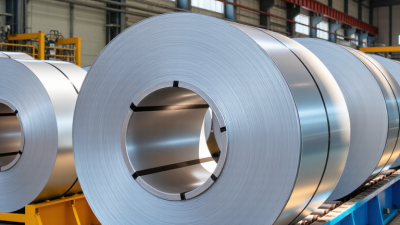
Color-coated coil is flat steel or aluminum supplied in a roll, with a finished coating applied before fabrication. It arrives as a large metal strip, often wound around a heavy core. The coating is applied on a continuous line, allowing long, even runs. Not paint alone.
Before coating, the strip is cleaned to remove oil and surface residue. A conversion treatment helps the coating adhere and can improve corrosion resistance. Rollers apply primer and a colored topcoat, while controlled ovens cure each layer. Backside coatings may also be added, depending on the intended use. Exact materials and temperatures vary by product specification.
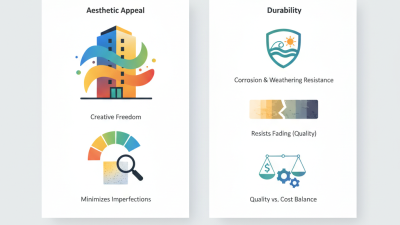
After cooling, the finished strip is inspected for color consistency, coating thickness, adhesion, and visible defects. Small differences matter. A glossy sample may look uniform under showroom lights but reveal variation in daylight. For a fair assessment, buyers can request technical data, sample panels, and details about the inspection method. Even a carefully controlled line may produce minor finish variation, so tolerances should be clear before production. Check that the stated coating system suits the forming process and expected exposure; a decorative finish alone does not establish long-term performance.
How to Evaluate Manufacturers for Global Sourcing
Global sourcing starts with proof, not a glossy catalog. Ask each producer for recent mill test certificates, coating-mass results, and base-metal thickness tolerances. Compare the stated metallic coating, paint system, gloss, and color difference against your purchase specification. Request samples from different production runs; one attractive panel proves little. The World Steel Association’s World Steel in Figures 2024 reports 1,892.2 million tonnes of crude steel output in 2023. At that scale, documented material origin and batch traceability are practical screening criteria, not paperwork for its own sake. Check whether coil numbers link directly to inspection results. Small gaps matter.
Evaluate the production line, too. Ask for operating ranges, minimum order quantities, packaging photos, and loading plans. Verify that corrosion tests match your exposure conditions; test hours alone do not predict service life. Request independent inspection rights and clear remedies for out-of-tolerance coils. UNCTAD’s Review of Maritime Transport 2024 reports maritime trade volume growth of 2.4% in 2023, underscoring the need to plan around shipping conditions. Compare quoted lead times with port distance, sailing frequency, and buffer stock. No scorecard is perfect. A trial shipment can reveal packaging or transit problems before you commit to larger volumes.
Seven Color-Coated Coil Manufacturers and Their Capabilities
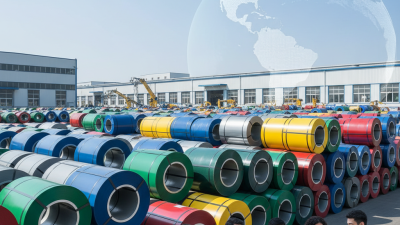
The seven manufacturers worth comparing are best understood by capability.
Integrated mills control steelmaking and substrate consistency; dedicated coating-line operators offer tighter control over zinc layers and paint application.
Building-focused producers handle common roofing profiles and broad color ranges. Appliance-grade specialists target smooth surfaces and stable finishes. Automotive-oriented suppliers emphasize flatness and coating uniformity. Custom-color coaters suit shorter runs, while corrosion-focused producers develop systems for coastal or industrial exposure.
Scale matters, but it does not guarantee a suitable coil.
The World Steel Association’s World Steel in Figures 2024 reports 1,892.2 million tonnes of crude steel production in 2023, reflecting a large, varied supply base.
Buyers should compare substrate thickness, coating mass, paint system, color tolerance, and batch traceability—not just quoted price.
Ask for a recent sample and test the cut edge; a datasheet can look cleaner than the coil itself.
Small details matter.
One limitation is that capability labels overlap: a strong producer may not offer every finish or minimum order size. Check the actual line, test records, and delivery consistency before choosing.
Comparing Product Ranges, Quality, and Certifications
A useful comparison starts with product range, not a catalogue headline. Check available substrate grades, thicknesses, widths, coating systems, and finish options. Ask for sample panels and technical data sheets; a glossy sample can hide uneven color or weak edge coverage. Small details matter.
Quality claims need evidence. EN 10169 sets technical delivery conditions for continuously organic-coated steel flat products, while ISO 9001 certification should be checked for scope and current validity. Request coil-specific test records covering coating thickness, adhesion, color difference, and corrosion performance. World Steel Association’s World Steel in Figures 2024 reports 1,892.2 million tonnes of crude steel production in 2023. That scale indicates a broad upstream industry, but it does not prove that any supplier can deliver consistent pre-painted coil.
A certification logo is not a test result.
For global buyers, compare packaging, traceability, lead times, and documented inspection procedures alongside price. Ask how coils are protected against moisture during sea transport, and whether batch numbers link to inspection records. A claimed export capability is worth verifying against recent shipment references. That comparison is useful, but incomplete: local climate, forming methods, and installation details can change coating performance.
I would avoid ranking suppliers on brochures alone. Request comparable samples and test data.
Key Considerations for International Purchasing and Delivery
For international buyers, a color coated coil is more than a finish and a price. Confirm the base metal grade, coating type, thickness tolerance, and color reference in writing. Ask for a current technical data sheet and sample panel. Check the panel under daylight, since warehouse lighting can hide subtle shade differences. Small detail, big impact.
Shipping plans deserve the same attention as product specifications. Request coil dimensions, unit weights, packing photos, and loading instructions before confirming an order. Coils need secure support and moisture protection during transit; damaged edges or trapped condensation can create costly problems. Clarify who arranges export packaging, cargo insurance, and delivery to the final destination. A low quote may exclude some of these items.
Lead times can shift when production, port schedules, or customs clearance change. Ask for a realistic dispatch window and updates at agreed milestones, rather than relying on a single promised date. Verify the commercial documents match the order, including quantities, product descriptions, and destination details. Keep a written record of agreed tolerances and remedies for shortages or transit damage. No plan is perfect, and buyers sometimes overlook local unloading limits; checking crane capacity and storage space early can prevent an avoidable delay.