Leave Your Message

What Is Color Coated Coil and What Is It Used For?

Steel remains a foundational material for buildings, appliances, transport, and infrastructure. World Steel Association data show that global crude steel production reached 1,882.6 million tonnes in 2024. That scale makes material performance and manufacturing choices significant. Buildings add another reason to examine durable exterior products. UNEP and the Global Alliance for Buildings and Construction reported that buildings and construction accounted for 32% of global energy demand and 34% of energy-related carbon dioxide emissions in 2023. These figures describe the sector, not the impact of any single material. Still, they frame why designers assess durability, maintenance, and service life.

Color Coated Coil is flat steel or aluminum strip coated through a continuous industrial process. The coil is cleaned, treated, coated with primer and paint, then cured in an oven before being rewound. The finished surface can provide color, corrosion protection, and a consistent appearance. A smooth, factory-finished panel can also reduce the need for painting at the construction site. Useful, but not a cure-all. Applications include roofing, wall cladding, garage doors, appliances, and some interior components. On a sunlit roof, coating choice affects color retention and weather resistance; on an appliance, appearance and cleanability may matter more. Performance depends on the metal substrate, coating system, thickness, forming process, and exposure conditions. A low-cost coil can look suitable at purchase yet prove poorly matched to a coastal or industrial setting. This guide explains how Color Coated Coil is made, what its specifications mean, and where it is commonly used.
What Is Color Coated Coil and What Is It Used For?

What Is Color-Coated Coil?

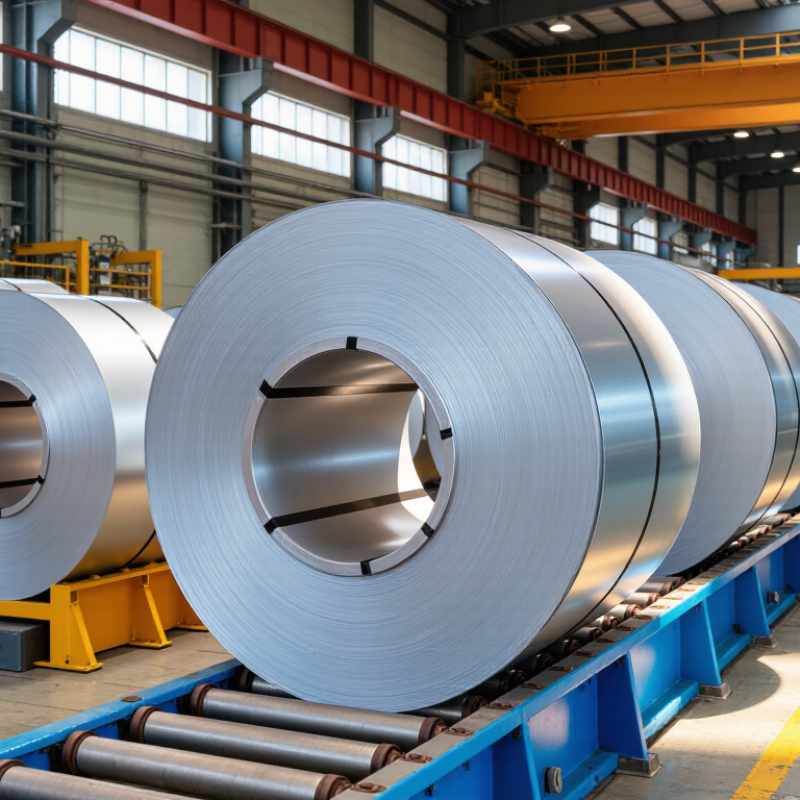
Color-coated coil is flat steel or aluminum strip that receives a protective and decorative paint system while continuously moving through a factory line. The metal is cleaned, chemically pretreated, primed, and coated on one or both sides before being cured and rewound. This process is called coil coating. The result arrives ready for cutting, bending, or roll-forming, rather than requiring paint application after fabrication. That distinction matters.

A finished coil may have a thin primer beneath a colored topcoat, with a backing coat on the reverse side. Coating chemistry and thickness vary with exposure, forming needs, and the product specification; a roof panel facing strong sun may need different performance from an indoor cabinet. World Steel Association’s World Steel in Figures 2024 reports 1,888.2 million tonnes of crude steel production in 2023. That figure is not coated-coil output, but it shows the scale of the steel supply chain from which many coated products are made. The term “color-coated” can sound like one fixed material, yet finish, substrate, and coating system all affect performance. Check those details, not color alone.

How Color-Coated Coil Is Manufactured

Color-coated coil is made on a continuous production line. A metal strip, often steel or aluminum, unwinds from a large coil and passes through cleaning stages. Degreasing removes oil and dust; rinsing and drying prepare the surface for treatment. It moves continuously. A chemical pretreatment helps the coating adhere and protects the metal from corrosion. Operators monitor the strip’s speed and surface condition, since residue can affect the finish.

Next, rollers apply a primer, which is cured in an oven and cooled. Then comes the topcoat. Rollers spread paint evenly across the strip, while a separate coating may protect the reverse side. The coated metal passes through another curing oven, then cools before being rewound.

Small details matter. Temperature, line speed, coating thickness, and tension all influence the final appearance and performance. Inspection may check color, gloss, adhesion, and visible defects. Even with careful controls, edge marks or uneven gloss can occur if coating flow or strip tension drifts. The process is efficient, but it is not flawless; choosing a coating system still depends on the product’s intended environment and forming needs.

Common Substrates and Coating Types

Color-coated coil is usually made from steel or aluminum, and the substrate affects its strength, weight, and corrosion resistance. Galvanized steel has a zinc layer that helps protect cut edges and exposed areas. Galvalume-coated steel combines aluminum and zinc for added resistance in many outdoor settings. Aluminum is lighter and naturally forms a protective oxide layer, but it may dent more easily. The right choice depends on the panel’s shape, location, and expected service conditions.

Coatings generally include a pretreatment layer, primer, and colored topcoat. Polyester is a common, economical finish for roofing, wall panels, and indoor components. Silicone-modified polyester often offers improved color retention and weathering performance. PVDF coatings are selected for projects where appearance and outdoor durability matter over time. Plastisol uses a thicker coating and may suit applications needing extra surface protection. No single finish is best everywhere.

Details matter. A roof near the coast faces different exposure than an interior partition. Check the coating specification, substrate thickness, forming requirements, and warranty conditions together. Deep bends can stress the finish, while rough handling may leave small scratches that are easy to overlook. I would not judge coil quality by color alone; even a smooth, attractive surface tells only part of the story.

Key Properties and Performance Factors

Color-coated coil is steel sheet coated with a metallic layer and finished with primer and paint. Its performance depends on the whole system: steel thickness, zinc protection, paint type, film thickness, and how well the coating adheres. A flaw at a cut edge can expose the metal beneath. Small details matter.

ASTM A653/A653M specifies coating designations for zinc-coated sheet. Its G90 designation represents 0.90 ounces of zinc per square foot across both faces, about 275 grams per square metre. This is zinc mass, not paint thickness. For a finished coil, ASTM D3359 provides a tape-test method for assessing coating adhesion. Neither figure alone predicts service life: humidity, salt exposure, sunlight, forming, and installation all affect results. I would be cautious about any single lifespan claim without the exposure conditions.

Tips: Match the coating system to the site. For a coastal roof, ask for test data relevant to salt exposure, plus the specified paint chemistry and film thickness. Check cut edges and formed bends, too; they can reveal weaknesses hidden on flat samples.

Where Color-Coated Coil Is Used

Where Color-Coated Coil Is Used

Color-coated coil appears where a finished surface and corrosion protection matter. In buildings, it becomes roof sheets, wall cladding, gutters, and insulated panels. These parts often face rain, sun, and handling during installation. World Steel Association guidance notes that construction and infrastructure account for about half of global steel demand. That figure describes steel overall, not coated coil alone, but it helps explain why building products are a major application.

The material also forms appliance housings, air-conditioning panels, garage doors, and some vehicle components. A white appliance casing may need a smooth, easy-to-clean finish; an outdoor panel needs a coating system suited to weather exposure. Coil coating applies paint before the steel is formed, helping produce an even finish across long sheets. Still, “pre-painted” does not mean maintenance-free. Cut edges, scratches, and unsuitable forming can expose the metal beneath.

Tips: Match coating and metal thickness to the environment. For coastal or highly exposed sites, ask for documented corrosion and weathering test results. Small detail, often missed.

Sources: World Steel Association, Steel in Construction; World Steel Association, World Steel in Figures 2024, reporting 1.89 billion tonnes of crude steel production in 2023.

Where Color-Coated Coil Is Used

Application Common Products Typical Substrate Why Color-Coated Coil Is Used Key Selection Consideration
Roofing and building exteriors Roof panels, wall cladding, fascia, and flashing Usually galvanized or zinc-aluminum-coated steel; aluminum is also used Provides a finished color, helps protect the metal from corrosion, and can be roll-formed into building profiles. Match the coating system and substrate to the exposure conditions, forming requirements, and expected service life.
Industrial and agricultural buildings Roof and wall sheets for warehouses, workshops, and farm buildings Commonly coated steel coil Large areas can be covered with prefinished panels, reducing the need for painting after installation. Consider moisture, pollutants, animal housing conditions, and the building’s ventilation and maintenance needs.
Appliances Refrigerator panels, washing-machine housings, and other formed exterior panels Often cold-rolled steel with a suitable pretreatment and paint system Offers a consistent surface finish and can be cut and formed into appliance components. Specify the required surface appearance, scratch resistance, cleanliness, and forming performance.
Interior building components Ceiling panels, partitions, door skins, and trim Steel or aluminum, depending on design and performance needs Combines a ready-made decorative finish with a lightweight, formable sheet material. Choose a finish suited to indoor use and the expected cleaning, abrasion, and humidity conditions.
Furniture and storage products Cabinet panels, shelving, lockers, and storage units Typically prepainted steel Provides a uniform color and finish for panels that are cut, bent, or assembled into products. Check coating adhesion and resistance to handling marks during fabrication and installation.
Transportation components Selected vehicle, trailer, and equipment panels Steel or aluminum, depending on the component design Can supply a prefinished surface for formed panels where the specified material and coating meet the application requirements. Confirm suitability for vibration, impact, weather exposure, and any required industry specifications.

Color-coated coil is metal coil coated with paint or another organic finish before fabrication. The appropriate substrate and coating system depend on the application, forming process, and service environment.