2026 Top Trends in Round Pipe Design and Applications?
As the world progresses, the design and applications of round pipes are evolving rapidly. In 2026, we anticipate significant trends that will reshape this industry. According to industry expert Dr. Linda Harris, "Innovative designs in round pipes can enhance durability and performance across multiple sectors." Her insights highlight the critical role that round pipes play in various applications, from construction to manufacturing.
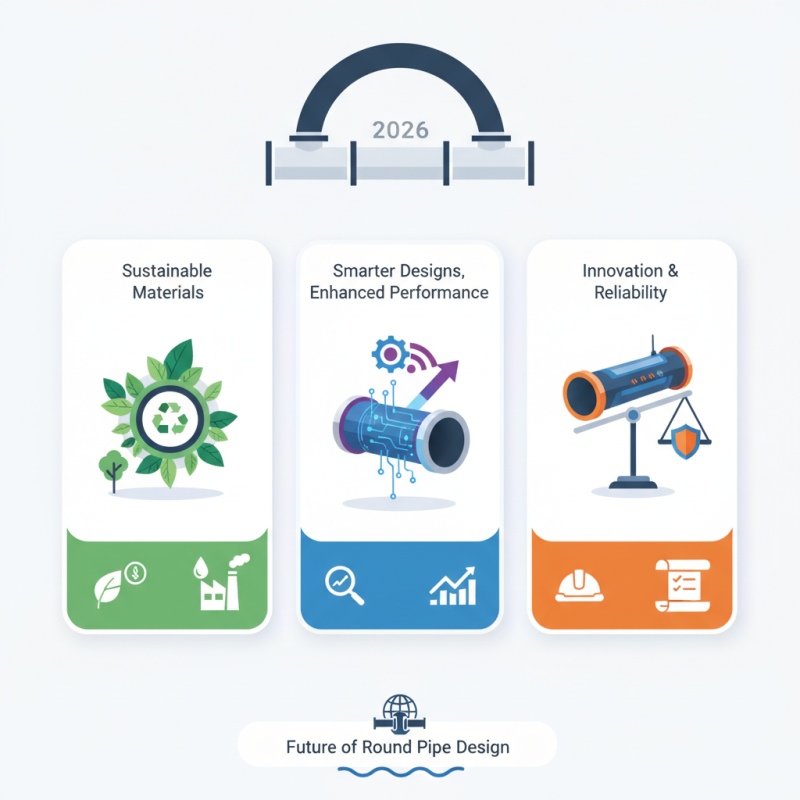
The increasing demand for sustainable materials is one trend gaining traction. Manufacturers are exploring eco-friendly options for round pipes. This shift not only meets environmental standards but also appeals to conscious consumers. Additionally, advancements in technology are paving the way for smarter designs. New techniques promise to improve efficiency and reduce costs.
However, challenges remain. While the push for innovation is strong, ensuring quality and safety remains a priority. Some designs might focus too much on aesthetics, neglecting functionality. This prompts a necessary reflection on the balance between innovation and reliability in round pipe production. The future of round pipe design is promising, yet requires careful consideration and responsible practices.
Current Innovations in Round Pipe Materials and Manufacturing Techniques
The evolution of round pipe materials and manufacturing techniques is transforming the industry. Innovations like high-strength alloys and composites are leading the charge. These advanced materials offer better durability and resistance to corrosion. This opens new possibilities in industries like construction and aerospace. In turn, manufacturers are adopting smarter technologies for production.
3D printing is becoming a game-changer in round pipe design. This method allows for intricate shapes and customized sizes that traditional methods can't match. Designers can experiment with different geometries to optimize flow and reduce weight. As the technology matures, it may also reduce waste, though quality control remains a challenge.
Another area of focus is sustainability. Eco-friendly materials are gaining traction, but they often require comprehensive testing. It raises questions about performance and longevity. As companies push for greener solutions, the importance of reliable sourcing and recycling becomes paramount. Stakeholders need to consider the entire lifecycle of materials.
Sustainability Trends in Round Pipe Design for Environmental Impact
The emphasis on sustainability in round pipe design is crucial for minimizing environmental impact. Innovative materials that reduce carbon footprints are gaining traction. Designers are exploring recycled metals and biodegradable composites. These materials not only lower waste but also enhance the overall structural performance of pipes.
Tips: Always consider the lifecycle of materials. Evaluate their sourcing and disposal. Engage in local recycling initiatives to contribute to sustainability.
Another trend involves improving manufacturing processes to reduce energy consumption. Advanced technologies like 3D printing and precision cutting are becoming standard. These methods optimize resource usage and minimize waste during production. However, their initial costs can be high, which may not appeal to all manufacturers.
Tips: Measure your energy efficiency regularly. Look for ways to integrate renewable energy sources in production. Collaborate with other companies to share insights on sustainable practices.
Sustainable design is also about optimizing the lifespan of pipes. Implementing design features that facilitate maintenance can reduce the need for replacements. Yet, there’s always a balance to strike between costs and environmental benefits. This ongoing reflection is vital for advancing sustainability in round pipe design.
2026 Top Trends in Round Pipe Design and Applications
| Trend |
Description |
Environmental Impact |
Application Areas |
| Recyclable Materials |
Use of materials that can be recycled at the end of the product's life. |
Reduces landfill waste and conserves natural resources. |
Construction, Plumbing |
| Energy Efficiency |
Designing pipes that lower energy usage during production and installation. |
Lowers carbon footprint associated with manufacturing processes. |
Heating Systems, Industrial Applications |
| Modular Design |
Creating pipes in segments for easy assembly and adaptability. |
Reduces waste during installation and allows for upgrades. |
Water Supply, Telecommunications |
| Smart Technology Integration |
Incorporating sensors and IoT capabilities into pipe designs. |
Enhances monitoring and maintenance efficiency, promoting resource conservation. |
Water Management, Smart Cities |
Advancements in Round Pipe Applications Across Various Industries
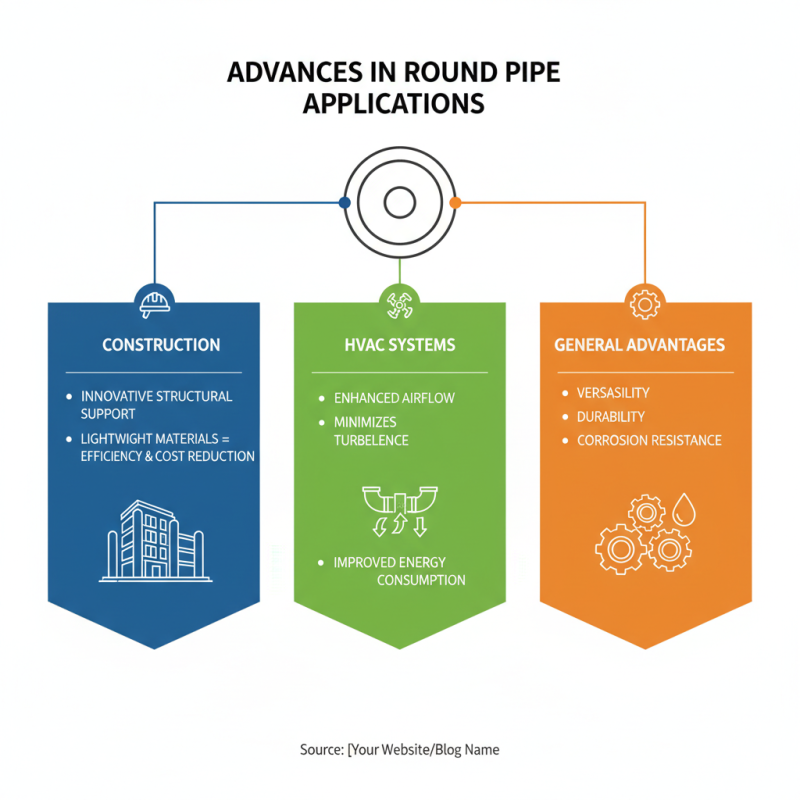
Round pipes are experiencing significant advancements across various industries. In construction, for instance, they are being used in innovative ways for structural supports. The shift to using lightweight materials has improved overall efficiency and reduced costs. In HVAC systems, round pipes enhance airflow. This design minimizes turbulence, which can lead to improved energy consumption.
Tips for a better round pipe design: consider material selection carefully. Different materials will affect weight and durability. Also, pay attention to joints and connections. Well-designed joints prevent leaks and ensure smooth operation.
Food and beverage industries are also adopting round pipes for sanitary applications. They allow for easy cleaning and maintenance, crucial for health regulations. The seamless design reduces the risk of contamination. However, it's vital to regularly review your pipe systems. Wear and tear can be problematic if overlooked.
Evaluate your designs frequently to stay current with best practices. Engage with industry experts; their insights can drive innovation. Don't settle into a fixed approach; be open to new ideas and techniques.
Smart Technology Integration in Round Pipe Systems for Efficiency
The integration of smart technology into round pipe systems is revolutionizing efficiency across various industries. Sensors embedded in these systems monitor flow rates and pressure levels in real time. This data is then analyzed to optimize performance. Organizations are becoming more proactive rather than reactive. Unexpected breakdowns become less common.
Automation plays a critical role in these modern pipe designs. Automated control systems can adjust output based on immediate conditions. This can lead to significant energy savings. Yet, the implementation can be daunting. Not all companies have the resources or expertise to integrate such technologies seamlessly. Training staff to leverage new systems is essential but often overlooked.
Moreover, data security concerns are rising with smart technology usage. As systems become interconnected, the risk of cyber threats increases. It's crucial to balance efficiency with safety. Regular updates and audits of security protocols should not be neglected. The path forward requires a commitment to continuous improvement and an openness to learning from both successes and failures.
2026 Top Trends in Round Pipe Design and Applications
Future Forecast: Market Demand and Trends for Round Pipes by 2026
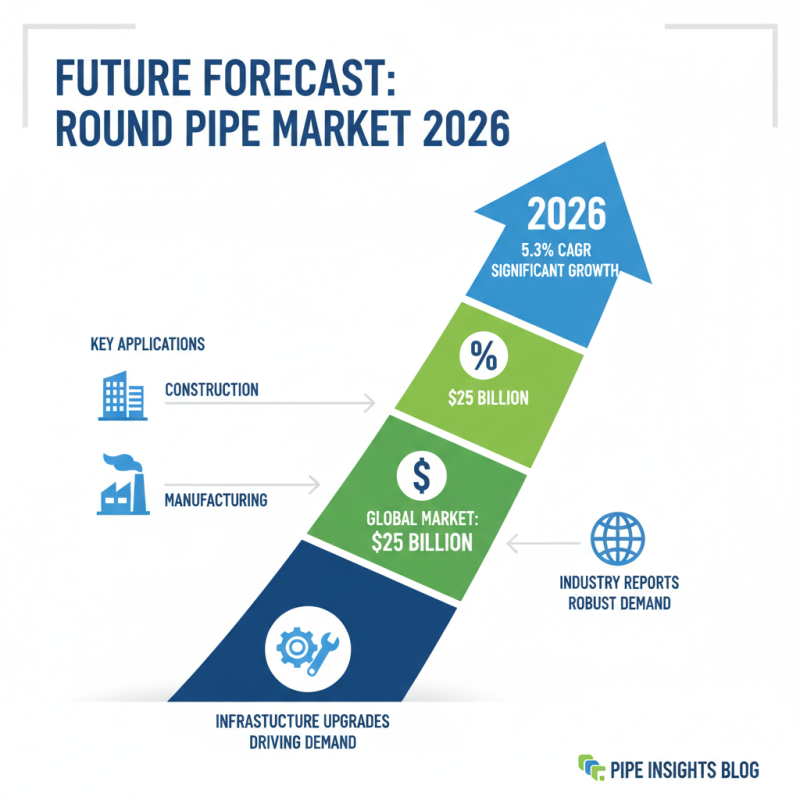
The round pipe market is poised for significant growth by 2026. Industry reports indicate a projected increase in demand due to infrastructure upgrades. The global round pipe market is expected to grow at a compound annual growth rate (CAGR) of around 5.3%, reaching approximately $25 billion by 2026. This trend highlights a robust demand for various applications, including construction and manufacturing.
Sustainability drives design innovations. Manufacturers are focusing on creating lightweight and durable materials for increased efficiency. For instance, metal and plastic round pipes are becoming increasingly popular due to their recyclability. Recent studies show that over 30% of construction projects aim for sustainable materials. However, challenges like resource shortages and fluctuating prices may hinder steady growth.
Technological advancements also shape the market. Automation in production processes enhances precision and reduces costs. Innovative designs, like seamless pipes, offer better performance in fluid transportation. Yet, the need for skilled personnel remains a concern. As the industry evolves, addressing these gaps will be crucial for meeting future demands.