China Top Copper Pipe Manufacturers and Suppliers
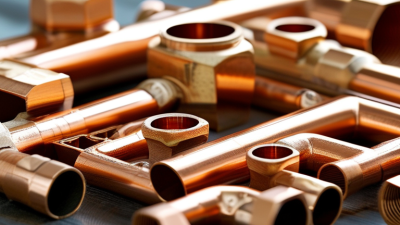
China’s copper industry supports plumbing, HVAC, refrigeration, power, and industrial manufacturing worldwide. Copper Pipes remain essential because they combine thermal conductivity, corrosion resistance, and long service life. The International Copper Study Group reported global refined copper usage above 26 million metric tons in 2023, reflecting strong demand across construction and electrical applications. The U.S. Geological Survey also estimated global mine production at about 22 million metric tons in 2023. These figures show why reliable sourcing matters.
China has a broad supplier base, from large integrated manufacturers to specialized exporters. Capable factories may produce straight lengths, soft coils, oxygen-free copper tubes, and precision refrigeration tubing. Buyers should examine wall-thickness tolerances, copper grades, pressure ratings, and testing records. Relevant standards can include ASTM B88, ASTM B280, EN 1057, and China’s GB/T requirements. Certifications help, but they are not the whole story.
A serious supplier should provide traceable mill certificates, dimensional inspection reports, and stable batch records. Factory audits can reveal details that websites often hide, such as storage conditions, packing quality, and calibration practices. Even then, comparisons are imperfect. A low quotation may exclude testing, tooling, packaging, or shipping protection. The IEA’s Global Critical Minerals Outlook 2024 highlights copper’s growing importance in electrification, increasing pressure on supply chains. This guide reviews China’s top Copper Pipes manufacturers and suppliers through product range, technical capability, export experience, compliance evidence, and after-sales support. Verify every claim. That step protects the project.
China’s Copper Tube Industry: 99.9% Purity and 100% IACS Conductivity
China’s copper tube industry is built around two measurable targets:
99.9% copper purity and
100% IACS conductivity.
International Copper Association
5.96 × 10⁷ S/m at 20°C
Reference value
100% IACS
The International Copper Association reports that commercial pure copper reaches approximately 5.96 × 10⁷ S/m at 20°C. This equals the 100% IACS reference value. However, purity alone does not guarantee identical performance. Oxygen content, phosphorus, processing temperature, and surface condition also matter.
Experienced buyers should request
mill certificates, conductivity test results, dimensional inspection records, and chemical analysis.
ASTM B75 and ASTM B88 provide widely used requirements for copper tube dimensions, mechanical properties, and applications.
A reliable supplier should also control wall thickness closely. Small variations can affect bending, pressure resistance, and installation quality.
Details matter here.
Production evidence is useful, but not sufficient.
A factory may report 99.9% copper, yet testing methods and sampling frequency can differ. That weakness deserves attention.
Independent laboratory verification can reduce uncertainty, especially for refrigeration, plumbing, heat-exchanger, and electrical applications.
The International Copper Study Group continues to identify China as a major force in global refined copper consumption, supporting the country’s large manufacturing base. Still, buyers should compare actual test records rather than rely on production scale. Clean surfaces, consistent annealing, and traceable batch numbers often reveal more than a sales claim.
Product Types and Grades: C10200, C11000, C12200, and ASTM B88 Tubes
China’s copper tube manufacturing sector serves plumbing, HVAC, refrigeration, and industrial equipment markets. The IEA’s Global Critical Minerals Outlook 2024 estimates copper demand near 26 million tonnes in 2023. Its stated-policies scenario reaches about 31 million tonnes by 2035. Reliable suppliers must therefore control chemistry, wall thickness, straightness, and traceability, not only production volume. USGS Mineral Commodity Summaries 2025 reports global copper mine output at roughly 22 million metric tons in 2024. Tight material control remains essential.
C10200 is oxygen-free copper, valued for high conductivity and low residual oxygen. It suits electrical and vacuum-related applications. C11000 is electrolytic tough-pitch copper, offering excellent conductivity and broad industrial availability. However, it should not automatically be treated as ASTM B88 compliant. C12200 is phosphorus-deoxidized copper and is widely selected for water, heating, and refrigeration tubes because it resists hydrogen embrittlement during brazing. ASTM B88 defines seamless copper water tube dimensions, temper, testing, and service types, including K, L, M, and DWV. Grade selection needs matching.
A serious purchasing review checks UNS designation, temper, outside diameter, wall thickness, and heat number. Mill certificates should show chemical analysis and mechanical results. Test certificates matter. One practical weakness is relying on a grade label alone. Surface cleanliness, ovality, and capped ends can affect installation quality. Buyers should request third-party inspection when quantities are large or tolerances are tight, although inspection adds time and cost. Small differences matter.
Quality Standards: GB/T 1527, EN 1057, ASTM B88, and ISO 9001
China’s copper pipe manufacturing sector serves plumbing, heating, refrigeration, and industrial projects worldwide. The International Copper Study Group reported global refined copper usage near 26 million tonnes in 2023. That scale increases pressure on suppliers to control chemistry, dimensions, and delivery consistency.
GB/T 1527 supports seamless copper and copper-alloy tubes for general applications. EN 1057 focuses on round copper tubes for water, gas, sanitation, and heating systems. ASTM B88 defines seamless copper water tube requirements, including dimensions and temper. These standards are not interchangeable. A capable supplier should confirm the required standard before production begins.
ISO 9001 strengthens process control, documentation, corrective action, and customer feedback. It does not replace product testing. Buyers should request mill certificates, chemical analysis, tensile results, hardness data, and eddy-current or pressure-test records. Traceability matters. Each bundle should connect to a heat number, inspection report, and production date. USGS estimated global copper mine production at about 22 million metric tonnes in 2023, showing how large the upstream market has become. Yet volume can hide weaknesses. In practice, some inspections still depend too heavily on paperwork, while packaging damage and ovality receive less attention. That deserves reflection. A reliable supplier should provide sample measurements, internal audit evidence, and clear explanations when results fall outside tolerance.
Top Chinese Manufacturers by HVAC, Plumbing, Medical, and Industrial Uses
China’s copper pipe manufacturing base serves four distinct markets: HVAC, plumbing, medical systems, and industrial equipment. The International Copper Study Group reported global refined copper use above 26 million tonnes in 2024, with China representing the largest demand center. This scale supports broad production capacity, but volume alone is not proof of quality.
For HVAC applications, buyers should check inner-surface cleanliness, dimensional tolerance, and pressure performance. Refrigeration-grade tubes often require controlled dehydration and sealed ends. The International Energy Agency reports that space-cooling demand has grown rapidly worldwide, increasing pressure on efficient heat-transfer systems. Small defects matter. A poorly capped tube can collect moisture before installation.
Plumbing suppliers should provide chemical composition records, wall-thickness data, and test certificates aligned with applicable standards, such as EN 1057 or ASTM B88. Medical gas tubing requires stricter cleaning, packaging, and traceability controls; EN 13348 is a useful reference for copper tubes used in medical gas systems. Industrial buyers may need custom coils, high-strength alloys, or tubes for heat exchangers. The ICSG data explains market scale, not supplier reliability. Factory audits, batch samples, and independent testing remain necessary. That extra step can feel slow, but it exposes problems that brochures often hide.
Supplier Evaluation: Capacity, Wall Tolerance, Pressure Testing, and MOQ
Choosing China’s top copper pipe manufacturers requires more than comparing quoted prices. Capacity should be verified through monthly output, furnace schedules, and recent shipment records. The USGS Mineral Commodity Summaries 2024 reported global copper mine production of about 22 million metric tons in 2023. That scale supports strong supply, but it does not prove consistent pipe quality. Ask for production records, equipment lists, and inspection photos.
Wall tolerance needs measurable evidence. Request dimensional reports for outside diameter, inside diameter, and wall thickness from each batch. ASTM B88 and EN 1057 provide useful reference points for copper tube dimensions and applications. A supplier claiming “zero deviation” deserves caution. Real factories manage variation; they do not erase it. Check whether reports use calibrated micrometers and identify the sampling frequency.
Pressure testing is equally important. Ask for test pressure, holding time, medium, and pass criteria. EN 1057 includes leak-tightness requirements for copper tubes, while project specifications may require stricter hydrostatic or pneumatic testing. Confirm that test results match the exact alloy and temper ordered. MOQ should be linked to production economics, not vague sales policy. A practical trial order may cover one coil, one straight-length bundle, or a defined tonnage. The International Copper Study Group’s market outlook shows continuing demand growth, yet smaller orders can face longer scheduling. Request a written lead-time range, packaging details, and a remedy for failed inspection. Mistakes happen. Unclear responsibility is the real risk.
China Copper Pipe Supplier Evaluation Benchmarks
This benchmark chart compares four practical sourcing criteria without using company or brand data. Scores are normalized to a 0–100 screening scale; the reference values are shown in the tooltips.
Higher scores indicate stronger reference performance for supplier qualification. Final purchasing decisions should verify production records, material certificates, dimensional inspection reports, pressure-test records, and order-specific MOQ terms.