How to Choose the Right Carbon Steel Plate for Your Project?
Choosing the right Carbon Steel Plate for your project can be challenging. The options available seem endless, and each type has its unique qualities. Understanding these characteristics is crucial. Carbon Steel Plates come in various grades and thicknesses, each suitable for different applications.
Factors like tensile strength and corrosion resistance impact your choice. An informed decision can enhance your project's durability and performance. Inconsistent quality from suppliers can lead to complications and undesired outcomes. Being aware of these risks promotes a more reliable selection process.
Always analyze your specific needs before selecting a Carbon Steel Plate. A thorough understanding of both the plate's features and your project's demands will guide you. This is not just about picking a material; it's about ensuring long-term success. Embrace the complexity of choices to find the optimal Carbon Steel Plate for your objectives.
Understanding Carbon Steel Plate Types and Grades for Projects
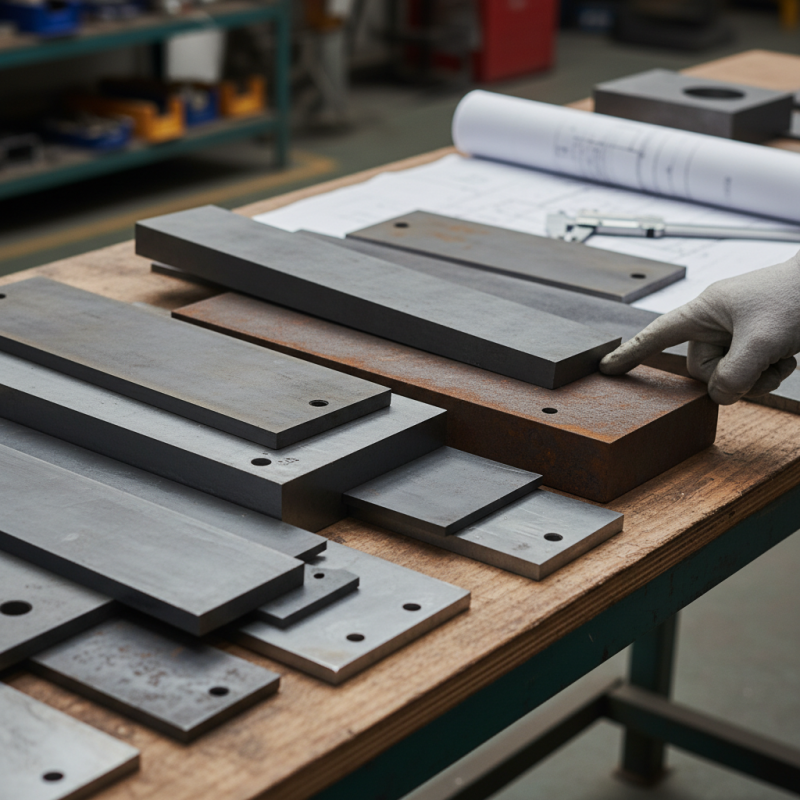
When selecting the right carbon steel plate, understanding types and grades is crucial. Carbon steel plates are categorized into four main types: low carbon, medium carbon, high carbon, and ultra-high carbon. Each type exhibits distinct characteristics. For example, low carbon steel contains approximately 0.05% to 0.25% carbon, making it malleable and easy to weld, ideal for structural applications.
Grades also play a vital role in performance. The American Society for Testing and Materials (ASTM) provides standards for carbon steel, including ASTM A36 and A572. ASTM A36, a low carbon steel, is often utilized for construction due to its strength and weldability. Conversely, ASTM A572 offers higher strength, featuring five grades with tensile strengths ranging from 58 to 80 ksi. Choosing the appropriate grade affects factors like durability and resistance to impact.
Despite these standards, mistakes can happen. Selecting a lower grade than required can lead to structural failures. Additionally, environmental factors like corrosion could compromise steel's longevity. A recent industry report indicated that nearly 20% of steel failures stem from inadequate material selection. A careful evaluation of project requirements remains essential to avoid such pitfalls.
How to Choose the Right Carbon Steel Plate for Your Project?
| Type |
Grade |
Typical Applications |
Thickness Range (mm) |
Yield Strength (MPa) |
| Carbon Steel |
A36 |
Construction, General Fabrication |
6 - 100 |
250 |
| Low Carbon Steel |
A572 |
Structural Beam and Shapes |
6 - 75 |
345 |
| High Strength Low Alloy |
A992 |
Steel Structures, Columns, Beams |
6 - 50 |
350 |
| High Carbon Steel |
1045 |
Machining, Axles, Gears |
5 - 40 |
450 |
| Specialty Steel |
A588 |
Corrosion-Resistant Structures |
6 - 75 |
345 |
Key Properties of Carbon Steel: Strength, Ductility, and Hardness
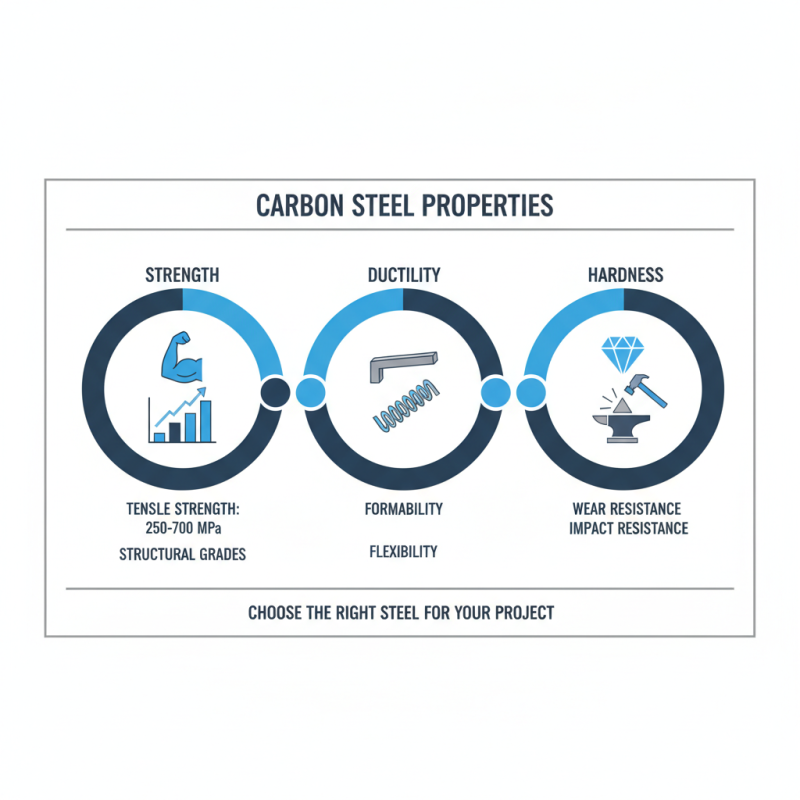
When choosing a carbon steel plate, understanding its key properties is crucial. Carbon steel is primarily defined by three characteristics: strength, ductility, and hardness. Strength is often measured in tensile strength, with structural steel grades ranging from 250 MPa to over 700 MPa. This variance allows for a tailored approach depending on the project requirements.
Ductility is essential for applications needing formability. High ductility grades can elongate up to 20% before breaking. Your project may require materials that can bend without fracturing. Hardness, measured by the Rockwell scale, indicates a material's resistance to deformation. This property is vital for components exposed to wear and impact, with hardness values typically between 50 and 60 HRc for heavy-duty applications.
**Tips:** Always match carbon steel properties to your specific project needs. Prior research on industry specifications can optimize selection. Remember, errors in selection can lead to project delays and increased costs. Consider the balance between strength and ductility; overly strong plates may lack the flexibility needed in certain applications.
Evaluating Thickness and Dimensions for Your Specific Applications
When selecting carbon steel plates, evaluating thickness and dimensions is crucial. The right thickness influences the plate's strength and performance in various applications. Thicker plates are generally stronger but can be more challenging to work with. Consider your project's specific requirements. For example, structural components often need extra thickness to bear significant loads safely.
The dimensions are equally important. Length and width should align with your design specifications and installation conditions. Plates that are too large may require additional processing, while too-small plates could lead to wasted materials. It is essential to measure precisely and consider tolerances. Sometimes, misunderstandings in dimensions can result in costly rework.
Reflecting on past projects can guide current choices. Noticing where thickness caused issues in handling or where dimensions led to fit problems can provide valuable insight. Working closely with suppliers for specifications and recommendations creates a reliable foundation for your project. Always verify capabilities and ensure that the chosen carbon steel plate meets your anticipated application demands.
Carbon Steel Plate Thickness Comparison for Different Applications
Deciding on Surface Treatment: Uncoated vs. Coated Carbon Steel Plates
When choosing carbon steel plates for your project, surface treatment is crucial. Uncoated steel plates are often less expensive and readily available. However, they come with higher maintenance needs. Without a protective coating, these plates are susceptible to corrosion. Industry data shows that uncoated steel can lose about 80% of its strength in corrosive environments over time.
On the other hand, coated carbon steel plates offer enhanced durability. A protective layer can significantly increase their lifespan. Coating options, such as galvanization or powder coating, create a barrier against moisture and chemicals. Reports suggest that coated steel has a corrosion resistance improvement of up to 300%. Yet, the initial cost for coated plates can be higher.
Choosing between coated and uncoated plates involves weighing costs against performance. Consider the environment where you will use the steel. If exposure to moisture or chemicals is likely, the investment in coated plates pays off. However, for simpler projects in a controlled environment, uncoated plates may suffice. Balancing these factors will lead to a more informed decision.
Cost Considerations and Supplier Selection for Carbon Steel Plates
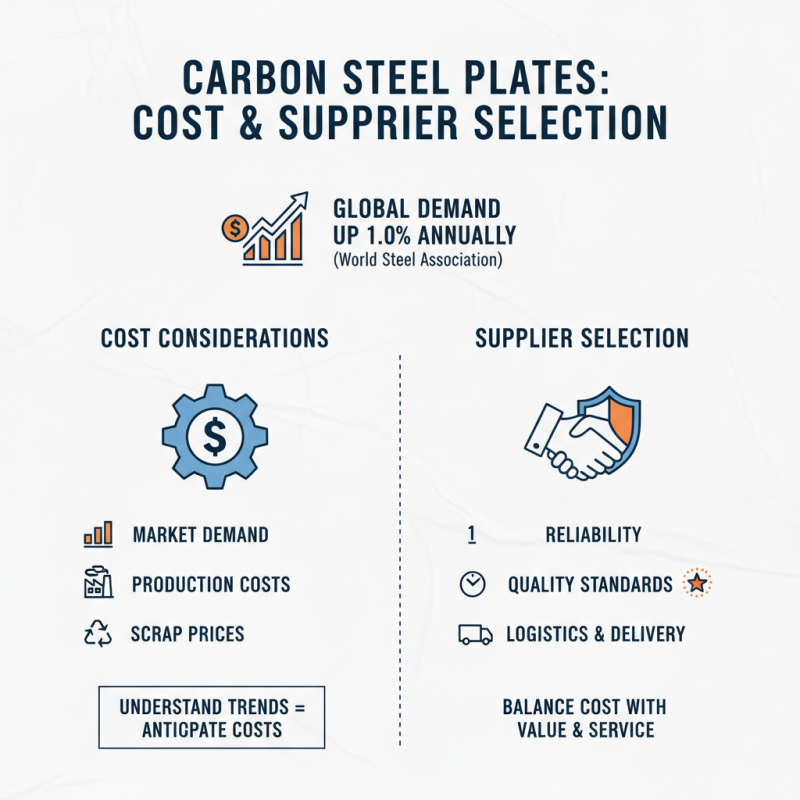
When selecting carbon steel plates, cost is a critical factor. Steel prices fluctuate based on market demand, production costs, and scrap prices. According to a recent report by the World Steel Association, global steel demand is expected to rise by 1.0% annually. Understanding these trends helps you anticipate costs better.
Supplier selection is equally important. When assessing suppliers, consider their reliability and quality certifications. According to industry standards, suppliers who comply with ISO 9001 demonstrate a commitment to quality management. This can ensure you receive plates that meet your project requirements.
Tips: Always request samples. This helps you evaluate the steel's performance. Investigate suppliers’ past projects and customer reviews. It gives you insight into their service and reliability. Be wary of extremely low prices; they often come with compromises in quality. Doing due diligence can save money and headaches in the long run.