Top 10 Benefits of Using Seamless Pipe in Construction?
In modern construction, materials play a crucial role. One material that stands out is the seamless pipe. It has numerous benefits that attract industry professionals. Seamless pipe eliminates the need for joints, reducing potential weak points. This characteristic enhances the overall strength of structures.
Durability is a key advantage. Seamless pipes resist pressure and corrosion effectively. Many construction projects utilize them for oil and gas transport. The seamless design allows for better flow characteristics. This is vital for efficiency in various applications.
However, the use of seamless pipe is not without its challenges. It can be more expensive than traditional pipes. This cost may raise concerns for budget-conscious projects. Additionally, the manufacturing process requires precision. Mistakes in production can lead to significant waste. Despite these considerations, the benefits often outweigh the drawbacks. Seamless pipe remains a preferred choice in the construction industry due to its remarkable properties.

Advantages of Seamless Pipe in Structural Integrity and Strength
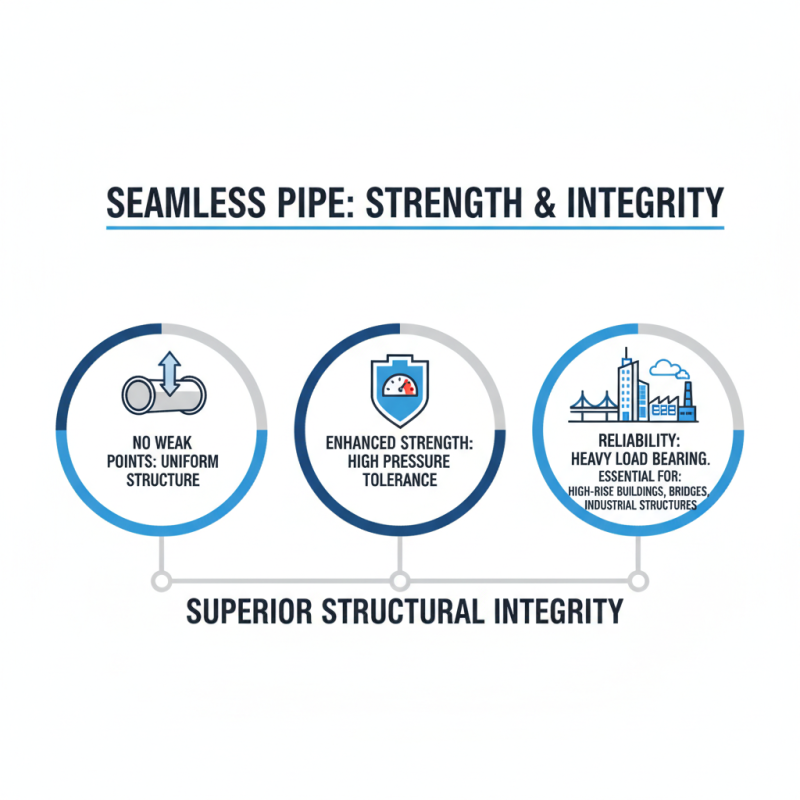
Seamless pipes play a crucial role in construction due to their strong structural integrity. These pipes are manufactured without joints, which reduces the likelihood of weak points. This design leads to enhanced strength, allowing for higher pressure tolerance. In high-stress environments, seamless pipes can withstand heavy loads without deforming. Their reliability is essential in many applications, like high-rise buildings, bridges, and industrial structures.
One significant advantage of seamless pipes is their uniform wall thickness. This consistency provides predictable performance under various conditions. It minimizes the risk of failure due to stress concentrations. Moreover, seamless pipes reduce the chances of leaks, which can be a costly and dangerous issue. Construction projects benefit from fewer inspections and repairs. However, it is vital to ensure proper installation and maintenance. A neglected seamless pipe can lead to serious problems down the line.
Construction professionals must regularly assess the condition of these pipes. Understanding the importance of seamless pipes can lead to better decision-making. The advantages are clear, but attention to detail is paramount for success.
Cost Efficiency in Construction Projects Using Seamless Pipe
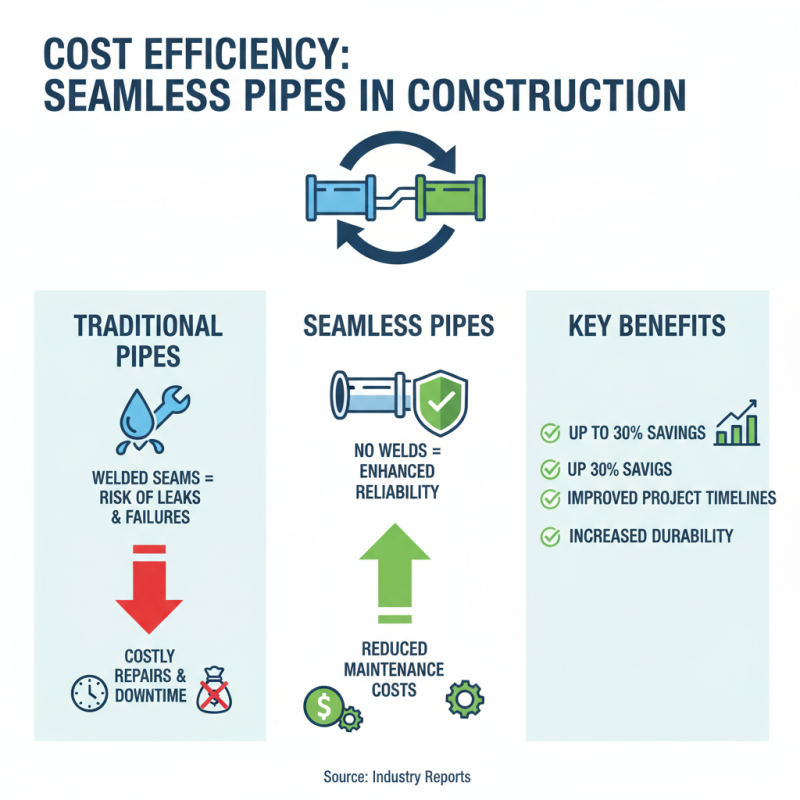
Seamless pipes offer significant cost efficiency in construction projects. Their manufacturing process creates pipes without the welding seams found in traditional pipes. This results in reduced chances of leaks and failures, which can lead to costly repairs. According to industry reports, using seamless pipes can lower maintenance costs by up to 30%. This aspect is crucial for large-scale constructions where downtime can heavily impact timelines and budgets.
When considering materials for a project, it's essential to evaluate the long-term benefits. Seamless pipes often come with a higher upfront cost. However, their durability and resilience can lead to savings over time. Projects experienced up to 25% fewer delays when using seamless pipes due to their strength and lower failure rates. This reliability is invaluable in maintaining budgets and timelines.
Tips: Always assess the project requirements before choosing materials. Consider working with a professional who can provide insights. Investing time in planning can yield significant cost benefits later. Additionally, remember that while seamless pipes are advantageous, they are not a one-size-fits-all solution. Evaluate the specific needs of your project carefully.
Resistance to Corrosion and Environmental Factors
Seamless pipes have become a preferred choice in construction, especially regarding resistance to corrosion and environmental factors. Unlike welded pipes, seamless varieties offer fewer points of weakness. This property enhances their durability. In fact, studies show that seamless pipes can last up to 30% longer in corrosive environments compared to their welded counterparts.
Corrosion can be a major issue in construction, particularly in coastal areas. A report from the National Association of Corrosion Engineers states that corrosion costs the U.S. economy over $276 billion annually. Seamless pipes significantly reduce these costs due to their resistance to rust and wear, which is crucial for long-term infrastructure investments.
Tip: When selecting seamless pipes, consider the environment. Factors like humidity and exposure to chemicals can impact performance. Regular inspections are also essential to ensure long-term durability.
While seamless pipes have many advantages, they are not without issues. Initial costs can be higher than welded options. Additionally, sourcing high-quality seamless pipes might pose challenges. It's vital to choose reputable suppliers to avoid subpar materials. Balancing cost with quality is key to your project's success.
Ease of Installation and Maintenance for Seamless Pipe Systems
Seamless pipes are increasingly popular in the construction sector. Their ease of installation is a significant advantage. A report by the American Society of Mechanical Engineers indicates that seamless pipe systems can reduce installation time by up to 30%. This efficiency translates into lower labor costs and faster project completion.
Maintenance is another area where seamless pipes shine. Their lack of joints means fewer potential leak points. This quality can lead to significant savings over the lifespan of a project. However, maintenance is not entirely worry-free. In some cases, if corrosion occurs internally, it can be difficult to detect early. Regular inspections become essential in such scenarios.
While seamless pipes offer clear benefits, they are not perfect. The initial costs can be higher compared to other options. Budget constraints may limit their usage in some projects. Additionally, specialized skills are necessary for proper installation. If not done correctly, benefits could diminish. Balancing these factors is crucial for construction professionals.
Versatility of Seamless Pipe in Various Construction Applications
Seamless pipe is gaining popularity in construction. Its versatility stands out in various applications. Building codes often require high strength and resistance. Seamless pipes excel in these areas due to their continuous structure. This means fewer weak points, making them suitable for high-pressure systems.
In the oil and gas sector, seamless pipes account for nearly 70% of the total pipe usage. This is largely due to their ability to withstand extreme conditions. They are often employed in structural frameworks. Engineers appreciate their reliability in transporting fluids and gases. According to a recent report, seamless piping reduces leak risks by approximately 30%.
Design flexibility is another crucial aspect. Seamless pipes can be easily customized to meet specific project needs. Their lightweight nature also facilitates easier handling on the job site. However, the manufacturing process can create inconsistencies, posing challenges in quality control. Maintaining uniformity is critical, and not all manufacturers succeed at this. Overall, seamless pipes present significant advantages while also inviting careful reflection on fabrication processes.